| Title | Body Count | Decade | Duration (mins) | Genre | Production Label | Production Status | Year | MacCredits | Film Link | Poster | Synopsis | MacFact |
|---|---|---|---|---|---|---|---|---|---|---|---|---|
INDIAN ATTACK | 19 | 1962s | 4 | Western | {"id":5609335,"value":"Macfilms","color":"darker-pink"} | {"id":5635072,"value":"Completed","color":"cyan"} | 1962 | 4,5,6,7,8,9,10,11,904,905 | 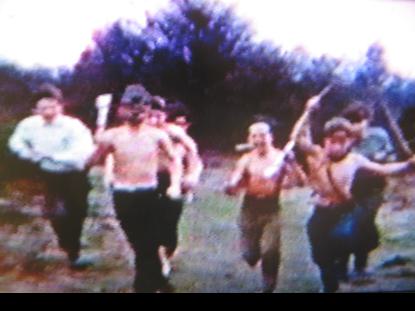 | It was the year the sixties began to swing. Andy Warhol launched ‘Pop Art’, James Bond made his screen debut in Doctor No, television satire arrived with That Was The Week That Was, Telstar beamed live TV pictures across the Atlantic, the Beatles released their first single, and The Twist was all the rage. This fabled youth quake wasn’t confined to London and Liverpool. Leafy Surrey also sparked a creative tremor.\
The general lifts binoculars to eyes. He sweeps them across the landscape. He appears to see something, and stops them at a certain point…\
So went Henry’s instructions for the opening scene of the totemic Indian Attack, filmed on Walton Heath in April 1962. Macfilms was born. No one can now remember who provided the spark that set the whole shebang in motion. Patrick, home from Oxford for the Easter break, believes the inspiration came from him, his intention being to entertain his younger brothers over the holidays, and perhaps to take his mind off his imminent final exams. Henry, on the other hand, who penned Indian Attack and coined the imaginatively challenged name ‘Macfilms’ - or ‘Macfilms & Co’ as he termed it in the script - thinks the idea may have been his. Equally, it might have been Richard, for he was already showing a keen interest in the film world, and it was he who recruited the cast of boys from Chinthurst School to knock seven bells out of each other in the bracken.\
No matter. On a breezy spring morning (the date was probably Friday, April 17) the Indian Attack team assembled at Amberdene, changed into their costumes and decamped to the so-called ‘mountains’ on Walton Heath with the props and equipment. At around 11 o’clock Patrick shouted ‘Action!’ and the long and erratic Macfilms story got underway as the cast set about charging at each other like over-revved Flymos.\
Only ninety seconds of this action-fest western have survived the years, and the scratchy footage, in which blood-crazed Redskins fight it out with geographically misplaced British soldiers, look as if it is held together with sticky tape. What remains tells us pretty well all we need to know about Henry’s gossamer thin plot: soldier spots Indian; Indian stabs soldier; dying soldier shoots Indian; more Indians pour over hill. And so it goes on, notching up nineteen dead in four exuberant minutes, an ethnic-cleansing body count never to be surpassed by any other Macfilm, unless you count the Titanic’s 1513. There’s little in the way of joined-up acting - just lots of pre-pubescent boys looking as if they have overdosed on fizzy pop - while attempting to find anything approaching a story-line is like trying to locate a virgin in a wild west brothel. The filming lasted for three days, and needless to say a flag-wavingly good time was had by all on Planet Slaughter.\
Editing in the early Macfilms days was a near impossible rocket science, depending as it did on a primitive splicing machine which only Richard had the patience to operate. This meant that Patrick – just turned twenty-one – had to shoot the entire movie in sequence. This famously required the cast to make frequent costume changes to give the illusion of mass numbers. Richard changed seven times from Paleface to Red Indian and back again, and bit the dust on four separate occasions with nary a scratch to show for it. Glitches could not be corrected, and in one set-piece battle a bare-chested Richard can be seen staggering blindly through the bracken with a dislodged mask, while Julian Stringer, who appears to have confused the roles of trooper and trouper, inanely makes banging noises with his mouth every time he fires his rifle. Later, as the film reaches its Custer’s-last-stand climax, a crowd of gawping bystanders from the village are visible in the background.\
That Christmas Amberdene acquired its first tape recorder, and Richard gave Indian Attack extra zip by raiding Henry’s record collection to make a primitive sound track using a kinetic number called Jungle Fever, flipside of The Tornadoes’ smash 1962 hit Telstar. The atmospheric wind noises at the end were filched from an instrumental number called The Lost Patrol, B-side of the Z-Cars Theme. Richard’s clearly audible instructions on the soundtrack – ‘Wind’ – add a surrealistic note. | Henry’s script reveals that Amberdene’s randy golden Labrador, Rinty, was awarded a brief role as a military mutt taking an urgent message to headquarters. In the event, the Macfilms answer to Rin Tin Tin never made it to the set. He led a busy social life and couldn’t be found that day. He made his screen debut three years later in James Bond. | |
GUNGA DIN (1962) | 12 | 1962s | 4 | Adventure/war | {"id":5609335,"value":"Macfilms","color":"darker-pink"} | {"id":5635072,"value":"Completed","color":"cyan"} | 1962 | 896,897,898,899,900,901,902,903 | 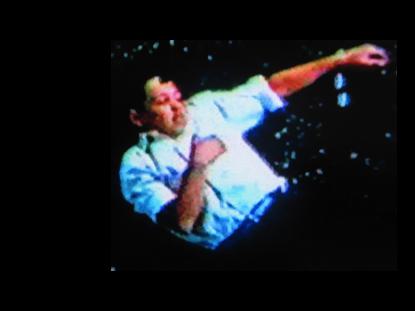 | Hollywood star Robert Mitchum used to say he had two acting styles - with a horse and without a horse. The early Macfilms had a similar acting dictum — kill someone or be killed by someone.\
Not to be outdone by Henry, Richard joined the dots of something approaching a proper plot with his adaptation of Rudyard Kipling’s rousing poem about a wannabe soldier in the days of the Raj. Made in August 1962 (same locations, same red jackets, same cast) Indian Attack’s kid brother is another rollercoaster in the bracken with everyone trapped in a sort of Groundhog Day in which they are endlessly killed. Patrick was again behind the camera, with Henry in the director’s chair.\
The resonant strains of Holst’s I Vow To Thee My Country set the tone of this patriotic tear-tweaker in which an Indian waterbearer, or bhisti, who fancies himself as a pukka military man, gives his life to save a contingent of redcoats from being massacred by mutinous natives on the North-West Frontier in 1884. Chinthurst fifth-former Ian Wilson, selected for the title role because of his swarthy ethnic looks, is not overburdened with matinee idol charisma, but he manages to introduce a touch of pathos that was absent from Indian Attack.\
In the Cecil B. Demented climax, the two sides are drawn to each other like iron filings to a magnet, doing to each other what your average food processor does to a bunch of browning bananas, and committing atrocities that would nowadays land them in The Hague. Henry lets loose with a broomstick rifle, while Richard gets so excited that he hacks brutally at an innocent frond of bracken before dying with a distinct lack of ouch at the hands of an invisible assailant. “Everyone suddenly paired off and I was left with no one to fight,” he explained years later. “It was like a party where nobody wants to dance with you. I hoped it wouldn’t show on the film, but it did!” Note too the first Macfilms aerial shot (taken from the famous climbing tree on Walton Heath) and Patrick’s cunning attempt to double the number of waiting ambushers with a pioneering if not totally successful piece of trick photography. The film ends with the gallant Gunga getting a full military burial with Henry’s air rifle slung symbolically across his grave.\
While Indian Attack’s not-so-subliminal message seems to be that dark-skinned savages are a thoroughly bad lot, Gunga Din furrows new turf by exploring the notion that Johnny Foreigner can occasionally display redeeming features. Though lodged at the lower end of the brow-spectrum, it can justifiably claim to be the first Macfilm with a social conscience. Despite having a cast of only six, Gunga Din’s body count is an impressive twelve, with Richard being killed three times, like one of those smiley, round-bottomed toys which, no matter how many times you hit it, bounces back up, beaming. | The one genuine casualty of Gunga Din was a valuable shotgun from Ardmore, mislaid on Walton Heath during filming and never seen again. | |
TALE OF TERROR | 2 | 1963s | 4 | Horror | {"id":5609335,"value":"Macfilms","color":"darker-pink"} | {"id":5635072,"value":"Completed","color":"cyan"} | 1963 | 18,19,954,955 |  | Macrory film-making can be accused of many things, but pretentiousness isn’t one of them, especially in the early days. With story-lines being shoe-horned into four minutes flat, the soil and exposure of Macfilms was not favourable to the tender shoots of subtlety or artistic quality. Simplicity was the order of the day, and there was no room for the Pinteresque pause, the meaningful ellipsis or the understated glance. What we’re left with is by and large pretty raw and primitive.\
So it was with Tale of Terror. In the literary annals of a nation that can boast Shakespeare, Austen, Dickens, Orwell, Coward, Christie and C.S. Lewis, Henry’s two-dimensional two-hander about ghostly retribution (two-bit tea leaf murders rich man; rich man returns from grave wrapped in white sheet to strangle two-bit tea leaf) does not rank especially high, but it was nonetheless a brave attempt to emulate the Hammer Horror genre which was then all the rage. First cousin Rory Cobb revealed in later life that he had bad dreams for weeks afterwards when he was shown Tale of Terror as a ten-year-old.\
This in-your-face tale of the expected was shot by the ever-patient Patrick in the so-called Dell at Amberdene in the spring of 1963, with Elizabeth coughing up the dosh for a spool of film as an Easter holiday treat. Richard, a few days into his teens, is in top form as the stooped and skint money-lender, A Scrubstein (yes, murderous Johnny Foreigner is back in his true colours). Daubed in flour and burnt cork, he lovingly strokes his dagger as he prepares to commit murder most foul, glowing satisfaction the way the boy on the Readybrek adverts used to shimmer when full of hot porridge oats. A scratchy rendition of Mars from Holst’s Planets Suite reinforces the sinister mood. Henry, apparently taking a break from Butlins Redcoat duties, utters his famous line ‘Hmmm getting late’ (the first words dubbed on to a Macfilm - although actually it’s Richard’s voice) before Scrubstein gives him the chopped liver treatment in the Lane End driveway and trousers his collection of farthings. The jury remains out on how Henry’s face ends up looking like a beefburger in a bucket of beer after he was stabbed in the back.\
Of course, the dead seldom remain dead for long in a Macfilm, and payback time is never long coming. After a sepulchrally lit interment (in which Henry and Richard double as top-hatted undertakers) Henry sits up in his grave with a deep-throated moan uncannily suggestive of a constipated she-elephant. Displaying an early penchant for tomato ketchup, he glides unsteadily from the graveyard in a manky bedsheet like a rotting figure out of Gray’s Anatomy to deliver the coup de grace in Scrubstein’s counting house. Richard, although already a veteran of seven screen deaths, chose this moment to have an attack of the giggles. His corpsing corpse is the first of many examples of unscripted Macfilms mirth. You can almost hear Henry say Gotcha! as, with honour satisfied, he plods back to the burial ground. There, in a final twist - inspired by the final scene in the American movie Premature Burial, starring Ray Milland, which Henry had seen the previous year - the letters R.I.P. have miraculously appeared on his grave. Dripping paint was a recurring problem for Macfilms (see Revenant) and a rogue splodge on the final letter creates the confusing impression that it all had something to do with the Royal Irish Rifles. The first of many Macfilms schlocky horror shows, Tale of Terror simmers away nicely if never quite reaching boiling point. | Stuck for a name for the money-lender, Henry and Richard consulted Elizabeth. It was she who came up with the name A. Scrubstein. | |
RUSSIA ARISE | 16 | 1963s | 4 | Historical/war | {"id":5609335,"value":"Macfilms","color":"darker-pink"} | {"id":5635072,"value":"Completed","color":"cyan"} | 1963 | 20,21,22,23,24,25,26,27,28,946,947,948 |  | The late summer of 1963 was a heady time. Britain’s teenagers succumbed to Beatlemania, the great train robbers raided the Crewe mail train, the Macmillan government was rocked by the Profumo scandal, and the soon-to-be assassinated President Kennedy signed a test ban treaty with the USSR. At Amberdene, Richard took a lucky dip into the sawdust of history and set out to demonstrate that the story of the Russian Revolution could be told in the same time as it takes to boil an egg. Easy peasy. Filming - with Henry behind the camera for the first time - took place in August, and featured the largest cast of Chinthurst boys yet coupled with a fusillade of new special effects. Henry’s crude bid to superimpose the film’s title against a rural background by pasting letters on a strip of cellophane was as underwhelming as the ‘O’ Level results he received the same week. Another plan (by Richard) to cause a pulse-quickening explodothon with a can of petrol was mercifully thwarted at the last minute by a horrified Patrick Snr, although later the same day Richard sneakily set fire to a wooden cannon in the first of countless Macfilms pyrotechnical experiments.\
Preceding the Oscar-winning Doctor Zhivago by a full two years, Russia Arise dispenses with Pasternakian subtlety and doesn’t waste valuable footage on diversionary love affairs (just as well, perhaps, in an all-male production). Taking numerous revisionist liberties with historical fact, it deals with the overthrow of the Russian royal family so fast (shades of a five-minute play the youthful Richard wrote about King John) that the wheels almost come off the whole shebang. An inanely grinning peasant several copecks short of the full rouble (Ian Anderson displaying the acting range of a pirozhki pie) is seen munching grass on the newly-mown lawn at Amberdene to illustrate the shocking poverty in the Russia of 1917. To a background of jaunty martial music, he and his Bolshevik muckers turn their murderous sights on the smaller-than-life Czar (a jolly Edwin Rhodes sporting an enormous beard that Richard wore in Gunga Din) and hack him to death as he downs a pint of ale on the terrace of his pebble-dashed palace.\
Carnage is the order of the day as the rebels, dressed in jeans and Marks and Spencer sweaters (and in Julian Stringer’s case, sporting black plastic specs) head for Narik (don’t bother looking for it on a map) for a fighting-by-numbers showdown with grinning Czarist troops. Some fast-paced argybargy in the final frames stop this socialist souffle from becoming a pancake, and Richard’s ninth Macfilm death is his most Tarantino-ish yet as he splatters half a bottle of tomato ketchup over his face and leaks ribbons of blood through his fingers, giving us an idea of what a haemoglobin play centre must look like. Look out too for one of the more idiosyncratic Macfilms props - a papier mache head donated by Chucks Cottage - doing death duty beside the blazing cannon. (It can also be seen peering over a ridge with the waiting soldiers in Gunga Din, and again, impaled on a sword and daubed with ketchup, in Retreat from Kabul.)\
Unfortunately, just as the loyalist soldiers are about to stage a courageous comeback with the self-same cannon (actually a cunningly disguised golf trolley which also resurfaces in Retreat from Kabul) Henry runs out of film with a body-count three short of Indian Attack’s nineteen. As far as Macfilms is concerned, the outcome of the Bolshevik uprising must forever remain a mystery. | “Oh no, I can’t bear to look,” croaked the ever-eager-to-please Elizabeth whenever she watched Richard’s face being spattered with ketchup. | |
JASON AND THE ARGONAUTS | 0 | 1963s | 0 | Fantasy/adventure | {"id":5609335,"value":"Macfilms","color":"darker-pink"} | {"id":5635073,"value":"Unfinished","color":"darker-cyan"} | 1963 | 754,755,756,757,758 | ||||
COCHISE – GREATEST OF THE APACHES | 14 | 1964s | 4 | Historical/western | {"id":5609335,"value":"Macfilms","color":"darker-pink"} | {"id":5635072,"value":"Completed","color":"cyan"} | 1964 | 30,31,32,33,34,35,36,37,38,889,890,892 | Like one of those rare bootleg recordings of the Beatles that gathered dust for years in a vault, the only copy of Cochise – Greatest of the Apaches went walkabout for the best part of five decades and has only recently resurfaced. Shot over the Easter holidays on Walton Heath (aka Arizona with bracken), this Macfilms biopic of the legendary Apache warrior was bolder and more enterprising, though no less bloody, than its gore-in-the-gorse predecessors.\
Richard’s inspiration was the opening paragraph of a feature about Cochise in the Readers Digest Junior Treasury (1960). Uniquely in the history of Macfilms it was shot by a woman (third cousin Renee Clifford) who operated the cine camera with verve and enthusiasm, and continually pushed at the dock of visual special effects, notably when she raced alongside the marauding Apaches during one of their charges.\
The idea for the film came from Richard, who had read about Cochise in his Readers Digest Junior Treasury. In a break from the Macfilms tradition that war-war is better than jaw-jaw, his script attempted to show that the Redskins might possibly have a valid case, and that a peaceful solution to their differences with the white man was preferable to endless carnage. Not that this stopped the film from notching up a heap big body count only a few corpses short of Indian Attack’s nineteen. Once again a large cast of Chinthurst boys (including most of the revolutionaries in Russia Arise) assembled in the ferns and laid into each other with every weapon they could lay their hands on. One could be forgiven for thinking that the wooden Macfilms tripod was part of their armoury, for it makes accidental appearances in nearly every battle scene.\
In the opening shots, which have sadly not survived the ravages of time, the camera homed in on a burning map of North America (the first example of Macfilms symbolism) before switching to the smoking ruins of a white settlement (the shed used in Tale of Terror) where Henry’s Cochise, determined to drive the white man from his ancestral lands, has been on the rampage. But we soon discover that the feather-ruffling Apache has his gentler side. He rashly decides to smoke the pipe of peace over a pow-wow with some white soldiers (still wearing their geographically misplaced red jackets) but the two-timing palefaces double-cross him and in the ensuing melee almost everyone except Cochise heads for the happy hunting ground. But don’t worry. Their doppelgängers quickly appear on the scene and there is another cheerful free-for-all in which they all bite the dust again.\
President Ulysses S. Grant, sitting at his desk in the White House, decides enough is enough and sues for peace. If you think the President looks suspiciously like Cochise’s twin brother, it’s because Henry, sporting the famous Macfilms beard, plays him too. In this new incarnation he instructs a god-fearing army officer played by John Foster (he also sports the Macfilms beard, meaning that he and Henry are never in the same shot) to broker a deal. Geronimo! Lovey-doveyness breaks out, the redskins (all wearing the same M & S shirts and slacks as the revolutionaries in Russia Arise) lay down their weapons, and all ends happily ever after. Not that Henry’s Cochise ever looked particularly unhappy. To his shame Henry corpsed or came close to corpsing in almost all his scenes (though ironically he was the only player who did not end up as a corpse) and afterwards he could only watch the film through parted fingers.\
Cochise broke new ground in a number of ways, notably by attempting the first Macfilms interior scene featuring President Grant in the White House. Macfilms did not yet possess artificial lights, and the scene was actually shot on the lawn at Amberdene, using a black screen as a backdrop. By 1964 standards, this was a wildly sophisticated innovation, as was the substantial amount of synchronised dialogue dubbed on afterwards. (The original sound track no longer exists and the dialogue was replaced by subtitles in Richard’s re-mastered modern version). All in all, a film with lashes of action, a side order of history, and a cast as lively as a swarm of bees in June. | A poignant by-product of Cochise is that it features what is probably the only moving footage of first cousin Charles Lewis, who died tragically young not many years after Cochise was made. | ||
HOUND OF THE BASKERVILLES | 1 | 1964s | 0 | Mystery/horror | {"id":5609335,"value":"Macfilms","color":"darker-pink"} | {"id":5635073,"value":"Unfinished","color":"darker-cyan"} | 1964 | 55,761,762,763,764 | ||||
RORKE’S DRIFT | 0 | 1964s | 0 | War | {"id":5609335,"value":"Macfilms","color":"darker-pink"} | {"id":5635073,"value":"Unfinished","color":"darker-cyan"} | 1964 | 765,766,768 | ||||
JAMES BOND | 4 | 1965s | 2 | Thriller | {"id":5609335,"value":"Macfilms","color":"darker-pink"} | {"id":5635072,"value":"Completed","color":"cyan"} | 1965 | 39,40,41,838,906,907,908,909,910 | The sensational unmasking of ex-Westminster pupil Kim Philby as the so-called Third Man in a Russian spy ring may have been one of the inspirations for this gritty spy caper made by Henry and Richard while both were at Westminster School. The other inspiration was new screen sensation Sean Connery, who by 1965 had starred in four James Bond films. Conceived and filmed during a single afternoon, this low-budget, bare-bones drama crams four violent deaths and lashings of kick-arse action into two breathless minutes of steely minimalism.\
Foreign agent Jeremy Cobb gives the giant Macfilms beard its third and final screen outing as he arrives in a cheapo plastic raincoat at a hush-hush military base (Amberdene’s kitchen garden) where he guns down Richard with a wooden pistol and starts taking illicit photographs. Enter a profusely grinning canine 007 (Rinty neatly stepping into the role he was meant to play in Indian Attack) who lumbers off with dogged glee to warn diminutive guard Rory Cobb that there’s a spy at Gate B. He in turn dashes into MI5’s garden shed HQ to alert Henry’s hard-as-wood James Bond that there’s trouble afoot.\
The spy who came in from the shed wastes no time trying to earn himself a place in the annals of cine-cool by nonchalantly heading for the scene sporting a brown trilby and smoking a pipe. During the subsequent manhunt, young Rory is shot dead, but (very confusingly) his doppelganger, wearing the same short trousers as his dead colleague, turns up to lend a hand. Seconds later he too is killed, but bizarrely another doppelganger appears in time to see a cornered Jeremy gulp down a cyanide capsule and, in the process, dislodge his beard.\
The film is best remembered for its who-dares-wins gunfight in which Henry’s pipe and Jeremy’s hat are ‘shot’ away. This ground-breaking special effects wizardry was achieved with lengths of thread.\
Xenophobic undertones are again evident in the bare scaffolding of a plot, but we must remember that the film was made when the Cold War was at its frostiest. Jeremy puts in a funky performance as the cartoon baddie agent, while butt-kicking Henry strolls through the carnage with an impregnable look of bone-headed contentment. One of the more puzzling aspects of the film is that the characters communicate throughout by blowing whistles at each other. An hors d’oeuvre rather than a main course, but nicely done. | Rory Cobb, who went on to make several Macfilms appearances in late middle age, confessed years later that he had no idea what was going on during the making of James Bond. | ||
JANE AND RINTY | 0 | 1965s | 2 | Animal documentary | {"id":5627497,"value":"Documentary","color":"darker-red"} | {"id":5635072,"value":"Completed","color":"cyan"} | 1965 | 912,1127,1128 | 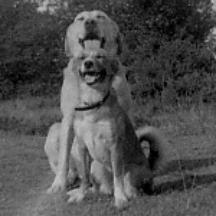 | This jaunty piece of documentary footage focuses on the lives of Amberdene’s two inseparable dogs, Jane and Rinty. Jane was picked out of a tub at the Banstead Cornstores by Richard on April 18, 1959. The feisty half-basenji, who lived to sixteen, was given her name by Patrick Snr, apparently in honour of Jane Murdoch, the comely teenage daughter of professional comedian and Walton resident Richard Murdoch (though possibly after Ardmore’s Nurse Jane, who looked after him when he was a child).\
Rinty, a wayward golden Labrador from Nursery Road, was instantly smitten with Jane when he met her on the heath, and from then on he contrived always to be at her side (well, nearly always). His owners eventually gave up on him, and he took up permanent residence at Amberdene in 1961, fathering Jane’s first litter of puppies that spring. Rinty’s many social commitments deprived him of a planned starring role in Indian Attack, but both he and Jane had wag-on parts in other Macfilms.\
Filmed by Henry in the spring of 1965, Jane and Rinty earns its place in this book on the grounds that the opening frames announce: ‘Macfilms present…’ Jane is seen digging for rabbits on the heath, while Rinty incessantly cocks his leg and plays the fool in a felt hat. He was highly intelligent, and you get the impression he knows he’s being filmed. Henry gave the film to Elizabeth on Easter Day, and Richard has preserved it in Macrory Memories, adding an excellent musical soundtrack. Never were there two happier dogs. | ||
REVENANT | 2 | 1966s | 6 | Horror | {"id":5609335,"value":"Macfilms","color":"darker-pink"} | {"id":5635072,"value":"Completed","color":"cyan"} | 1966 | 42,43,44,45,46,930,931,932,933,934,935,936,937,938,939,940 | Mercifully abandoning their brief foray into the world of pop music (listeners were spared most of their efforts, but recordings of All My Loving, Little Child, A World of Our Own and The House of the Rising Sun notoriously survive) Henry and Richard wisely decided to give their vocal cords an extended rest and return to movie-making. One of Amberdene’s most well-thumbed paperbacks was Valentine Dyall’s Unsolved Mysteries, a collection of supposedly true paranormal riddles, of which the most chilling was The Croglin Hall Vampire, a blood-curdling account of nocturnal visitations at a house near Penrith in 1875. The story inspired Henry to start work on the first Macfilms vampire flick, which began life during a three-week summer holiday at Ardmore in 1966 as The Unquiet Grave, although in the original title sequence a slip of the paintbrush corrupted this to The Unquiet Gravel.\
In the opening scenes, shot by Henry at Balteagh at the end of August, the church gates creak open of their own accord, rooks swoop low across the deserted graveyard, and Richard’s hands creep menacingly over the tombstone of one Eliza White (died 1885). Back in England, Henry intended to develop the footage into one of his simple ‘vampire kills man, man kills vampire’ storylines, but surrendered control of the project when real-life director James Ivory arrived at Amberdene a couple of weeks later to discuss turning Patrick Snr’s critically acclaimed book about the retreat from Kabul, Signal Catastrophe, into a big screen epic. Ivory, already being feted for his film Shakespeare Wallah, eagerly muscled in on the fledgling vampire movie, filling it with goodies from every shelf of the schlock supermarket.\
Renamed Revenant, this precocious son of Tale of Terror fanned out in all directions. It features the first Macfilms dream sequence, the first genuine interior scene using Richard’s newly acquired and much-prized artificial lights, lashings of Tacitus (Richard was taking Latin ‘A’ Level), and the first use of slow motion. In another daring move, the words ‘Macfilms present…Revenant’ materialise on the sash windows of Patrick Snr’s study when the newly bitten Ivory gets up to shut them. (It’s a title sequence, Jim, but not as we know it.) Given this new-found sophistication, it is rather surprising that the film’s vampire-repelling crucifix is made from two pipe cleaners.\
Several actors from the Macfilms stable make their first screen appearances here. We see Patrick Snr vigorously sucking neck, and Patrick Jnr nonchalantly playing cards and smoking at the graveside. It’s also him playing the slo-mo vampire, making his escape across the lawn as though wading through a foot of margarine. Women break into the previously male domain of Macfilms in the form of Elizabeth Macrory as Ivory’s grieving mother, and Ann Kernon (newly engaged to Patrick) making her scream debut in a damsel-in-distress role loosely based on Croglin Hall’s Amelia Cranswell. Her welcoming smile when she sees the vampire is like one of those tombstone grins they do in the Tom and Jerry cartoons before all the teeth drop out.\
Ivory himself is seen waking up with blood on his hands (‘…and I thought I was only dreaming’) before turning into a see-it-and-shiver vampire sporting plastic fangs from a Christmas cracker, causing Ann’s jaw to fall open as though someone has dropped an ice cube down her stays. The final frames, in which the Jim’ll-kitsch-it monster is cornered in the graveyard, were rendered unviewable by poor light and had to be re-shot in his absence. It was left to his stand-in, Henry, whose Macfilms death count was way behind Richard’s, to have a stake driven through his heart with a croquet mallet to the swelling Pilgrims Chorus from Tannhäuser. “He is at peace now,” declares Patrick Jnr of the ersatz vampire, his sonorous voice sounding curiously like a seven-inch single played at 33 rpm.\
Revenant’s period elegance is not enhanced by a confusing sub-plot involving the Queen of Spades, and the film suffered further indignities when a celluloid-hating projector melted a dozen or more frames during a December 1966 showing at Ivory’s New York flat.\
These hiccups aside, it created a new yardstick by slowing down the Macfilms casualty rate (63 deaths in the first five films alone) and hinting at a future beyond the formulaic spilling of blood and guts on Walton Heath. It is also the only Macfilm in which the three Amberdene dogs – Jane, Rinty and Henry – appear together in the same scene, dashing across the lawn with the Bratzas’ dog, Max, in hot pursuit of the vampire. | Ann Kernon’s cousin, a young Harvard graduate named Gilbert Butler, who is just visible through the swirling smoke at the head of the funeral procession in Revenant, later founded the Butler Capital Corporation. By 1979 he was responsible for $1.2 billion in pension funds and he subsequently became one of America’s top hundred richest men. Today he is an environmental philanthropist, using his fortune to preserve places of beauty such as his native Adirondack Mountains.
Extract from Sir Patrick Macrory’s obituary in The Times, May 1993.
He was a close friend of the film-making partners James Ivory and Ismail Merchant, who had approached him in the 1960s about filming one of his books. Ivory, on his first meeting with Macrory, was persuaded to play the role of a vampire in a four-minute home movie, and ended the day by having a stake driven through his heart with a croquet mallet. Merchant was cast as a bloodthirsty Afghan tribesman in another, which also featured the young Felicity Kendal. Merchant and Ivory returned the compliment by appointing Macrory chairman of Merchant Ivory Productions UK and inviting him and his wife to appear as extras in A Room With A View in 1986. | ||
RETREAT FROM KABUL | 0 | 1967s | 4 | Historical/war | {"id":5609335,"value":"Macfilms","color":"darker-pink"} | {"id":5635072,"value":"Completed","color":"cyan"} | 1967 | 54,56,57,58,59,60,62,922,923,924,925,926,927,928,929 | All You Need is Love, sang the Beatles that brilliantly hot summer, but All You Need is War was the Macfilms refrain with, of course, a little help from their friends. A year after James Ivory’s performance in Revenant, his partner Ismail Merchant turned up at Amberdene one Sunday morning with starlet protégé Felicity Kendal for more discussions about filming Signal Catastrophe. As usual with this ill-fated project, the ebullient Ismail was all mouth and no kaftan, but there and then he and nineteen-year-old Felicity volunteered to appear in a hastily thrown together bargain-basement version of the epic story.\
Out came the red jackets, the ceremonial swords, the Cossack hats and a huge box of Patrick Snr’s Smirnoff Vodka doubling as an ammunition crate. And so, more than a decade before The Good Life, Felicity Kendal made one of her first - and probably only unpaid - screen appearances in Britain. The woman destined to be named owner of the sexiest bum in the country, and who would later boast she could “flirt my way into any pair of arms I wanted”, was appropriately given a wiggle-on part in which Ismail (mysteriously wearing snazzy shades) spirits her out of a tea chest as the Brits prepare to leave Kabul. Patrick Snr, his eyes on slinkies, succumbs to the vindaloo-hot eye candy’s siren call and wolfishly invites her to join him at the head of his doomed army, treating her with such care that he might have been carrying a brimful bowl of soup across a tightrope.\
Macfilms takes the 1842 retreat at full tilt without hesitation, deviation or repetition, with the action rapidly descending into a sub-Errol Flynn free-for-all in which adults prove they’re as happy to slice and dice in the bracken as adolescents. Six days of horror, heroism and hell are telescoped into two minutes flat as the Taliban’s forebears (wearing the same green curtains that did shroud duty in Tale of Terror) unleash hell on the gallant Brits with bin Laden-style ferocity. You can almost see the old Gerry Anderson puppet strings above their heads as they carry out an Indian-Attack-with-attitude massacre like cavemen possessed. The treacherous Ismail (having mysteriously donned an orange tie) impales Felicity with his sword, and only Patrick Jnr as a horseless Dr William Brydon survives to reach the gates of Jalalabad (aka the garden shed used in Russia Arise). There he blurts out news of the signal catastrophe to Patrick Snr who admirably disproves the assertion of that summer’s James Bond movie, You Only Live Twice, by playing his fourth incarnation in as many minutes.\
Whether Merchant Ivory could have matched this mini-epic will never be known, for their own production never came to fruition. At the time of writing, the Macfilm kidults’ version of the disastrous retreat remains the only one ever filmed. | A quarter of a century later Felicity Kendal told Patrick and Henry that she still had vivid memories of making Retreat from Kabul, but to date she has not had the pleasure of viewing her youthful endeavours. It might be argued that her former husband Sir Tom Stoppard has served up more challenging screenplays.
Extract of letter from Ismail Merchant to Patrick Macrory, July 26, 1966:
Your account (of the retreat from Kabul) is so interesting, so exciting, and so complete in terms of character, both British and Afghan, that one cannot help thinking of the dramatic possibilities of your story. Mr Ivory is planning to be in London for a few weeks next month, and, if you have no objections, would like to talk to you about a possible film project. Let me say again, how exciting I found this whole account to be, and that the prospect of doing something with this little-known episode of British history in the East greatly appeals to me. | ||
THE HOUND OF THE BASKERVILLES | 3 | 1967s | 8 | Mystery | {"id":5609335,"value":"Macfilms","color":"darker-pink"} | {"id":5635072,"value":"Completed","color":"cyan"} | 1967 | 47,48,49,50,51,52,53,759,852,964,965,966,967 | This was the year of the Summer of Love, tra la, but for Macfilms it was murder and mayhem as usual. One of the enduring Macfilms mysteries centres on who penned the screenplay for The Hound of the Baskervilles. Patrick says he has a clear memory of writing it at Amberdene one rainy afternoon, and famously boasted to a girlfriend that he dashed it off in little more than an hour. But, as Holmes was fond of telling Watson, these are deep waters, and Richard’s claim to authorship of the grand old man of Macfilms is the more compelling because he still has the original script in his own handwriting.\
Whatever the case, this landmark movie is a Molotov cocktail of special effects and superlative action coupled with the first successful use of synchronised dialogue. The newly-married Patrick plays Sherlock Holmes, pipe clenched rigid as a spirit level in a nutcracker jaw, his sharply-honed features and lanky figure perfectly conforming to the artist Sidney Paget’s imagined likeness of the great detective in the Strand Magazine in 1889. (Patrick was following in the thespian footsteps of Pat Snr who played Holmes in a Limavady Town Hall production in the 1930s.) The redoubtable Percy Shelley of Indian Attack and Russia Arise fame, seemingly content to use only one of the forty-four muscles capable of producing facial expression, makes his third Macfilm appearance as a mute Doctor Watson.\
In the opening frames cigar-smoking Sir Charles Baskerville (Patrick Snr) confronts the hound from hell in Granny Lewis’s garden at Wonford and duly succumbs to a dicky ticker with scene-pilfering panache. Sir Charles Baskerville dead – mysterious death of baronet announces a headline in The Times, a neat touch by Richard echoed thirty years later in The Shining. Holmes and Watson listen with rapt attention as Sir Henry (Richard) describes the circumstances over a glass of sherry. In a deft piece of camerawork, the glass morphs into a tankard of beer and we are transported back to the 17th century where gung-ho Sir Hugo (Henry looking as if he has only recently removed his Hannibal Lecter muzzle) is seen whetting his whistle with his band of roisterers in a scene shot in the stables of the Briant family home in Walton-on-the-Hill. Drenched with beer by unappreciative serving wench Liz Briant, he unleashes the hounds (Henry Bassett and co.) before falling victim to the Baskerville curse, his eyes revolving like a couple of fruit machine dials whose lever has just been given an almighty yank as he meets his Maker.\
At last we see the fearsome creature in all its horror (a hound’s bollocks of a Great Dane called Chief borrowed from the Alexander family in Deans Lane) as it feasts on a confection of Kennomeat and ketchup smeared on Henry’s throat. Before long the Best-in-Show beast is back for more dog’s dinner, chasing Richard across Walton Heath in a barnstorming piece of footage shot by Henry in a single take. (Richard’s original plan to ring the changes and film this scene on Headley Heath was abandoned.)\
Hound’s fright factor is reinforced by some sinister mood music nicked from The Good, The Bad and The Ugly soundtrack, and the whole production is lent a stylish sheen by top-notch touches like the exotic blue bottle in Holmes’s Baker Street den and the evocative fade-out in Grimpen Mire (actually a hastily dug hole near Scrubstein’s derelict counting house in Tale of Terror).\
The obvious penalty for trying to condense Sir Arthur Conan Doyle’s storyline into eight minutes is a lack of clarity. For anyone not familiar with the book it is like being shut out of the pub and trying to follow the conversation through a steamed-up window. That apart, this is a film with red blood in its veins, its action scenes efficiently ventilating the cloistered labyrinth of the plot. Certainly it sent shivers down the spines of future generations. Lucinda says she was ‘traumatised’ when first shown it as a child and for years afterwards she believed there were quicksands on Walton Heath. Cecily reports the movie “scared me shitless.” Little Susie Alexander, whose father Ken played the ill-fated convict, cried out “Daddy’s dead” when shown the film at Amberdene, and had to be rushed home sobbing to find him. A movie that manages to be both moorish and more-ish. | The growls of the hound as it savages Sir Henry are a unique recording of the notorious Henry Bassett having his tummy tickled, while Jane the basenji, who burst into doggie song whenever she heard a mouth organ, contributed the unearthly howls which start the film. The remaining howls were supplied less convincingly by Henry and Richard. | ||
MOOR OF THE DOOMED | 1 | 1968s | 4 | Horror | {"id":5609335,"value":"Macfilms","color":"darker-pink"} | {"id":5635072,"value":"Completed","color":"cyan"} | 1968 | 61,63,914,915,917 | Slim in the plot department, but high in curiosity value, this undemanding chiller-thriller was based on a Chinese ghost story discovered by Richard in a book of the supernatural. Faceless monster chases terrified girl across lonely moor. Girl seeks help from farmer. Farmer turns round to reveal himself as the faceless monster!\
Made near the aptly named Murder Hole Road in the hills above Lough Foyle during a summer holiday in Ireland, the movie features eighteen-year-old Liz as the winsome victim being relentlessly stalked by Richard’s bare-legged monster across a landscape as quiet and as dead as the painted ship upon the painted ocean. Try as she might, Liz cannot shake off the ghastly creature. She stops to catch her breath by a stream and – oh dear – there’s the dogged demon’s reflection in the water. Even when she flings a lump of turf at her tormentor – daringly shedding her shawl in the process – he fails to get the message.\
The action continues in similar vein for four somewhat repetitive minutes at which point Liz seeks help from the spade-wielding owner of a tumbledown cottage. Whoops! Her hoped-for saviour wheels slowly round to reveal a demonic face, and another name is added to the burgeoning Macfilms body count.\
Despite an atmospheric musical sound track and Liz’s solid damsel-in-distress performance, Moor of the Doomed’s fright factor does not register high on the Richter Scale. Richard’s acting is hardly a feast of subtlety (he wears a stocking mask throughout) but he makes a decent fist of trudging like a cut-price avenging mummy across the peaty turf. The movie has the distinction of being the first Macfilm to feature footage shot from a moving car and – progress indeed – is the first in which no one donned a red army jacket. It is also the first of three consecutive Macfilms in which the central characters wear stockings over their heads. Moor of the Doomed, though more sophisticated than its two-hander predecessor Tale of Terror, is hardly the stuff of nightmares. | |||
CAR CHASE | 0 | 1970s | 0 | Action | {"id":5609335,"value":"Macfilms","color":"darker-pink"} | {"id":5635073,"value":"Unfinished","color":"darker-cyan"} | 1970 | 767,769,770,771,772 | ||||
THE CURSE OF FRANKENSTEIN (1972) | 4 | 1972s | 11 | Horror | {"id":5609335,"value":"Macfilms","color":"darker-pink"} | {"id":5635072,"value":"Completed","color":"cyan"} | 1972 | 64,65,66,67,68,69,70,71,324,325,326,327,328,329,330,331,332,336,337,678 | Some connoisseurs rate The Curse of Frankenstein their all-time favourite Macfilm, and its incendiary ending frequently made Sir Patrick misty-eyed. The last of the 8mm greats, it pounds along like one of those classic steam locomotives which made their twilight journeys during the same era.\
The dialogue-free action gets off to a cracking start as Dr Henry Frankenstein (the newly-knighted Sir Patrick sporting a natty red cravat) brings the monster to life in his Heath Robinsonian lab (Amberdene’s garage) with the help of the hi-tech machinery which operated Amberdene’s new swimming pool. Holding a naked flame to the creature’s hand and getting the hoped-for pained reaction, he excitedly sucks in his cheeks like the curtains in Dorothy’s bedroom as the tornado strikes in The Wizard of Oz. Bubbling liquids, bottles of blood, a papier mache parrot, Richard’s superb sound effects and Sir Patrick’s masterly melodramatic performance (was his hair really so naturally black at the age of 61?) combine to create a deliciously gothic atmosphere.\
Henry, a whippet-thin monster having a bad hair day in one of Elizabeth’s cast-off wigs, quickly overpowers the morally myopic boffin and heads for the big outdoors in his stocking mask, rubber hands and back-to-front suit. The ensuing exterior shots were filmed at a beauty spot on Colly Hill (the building from which the monster escapes is a Sutton Council water tower erected in 1911) with Henry plodding about in full public view among the ancient hilltop fortifications like a Dalek with a headache.\
In a deft mood transition, the monster befriends a kite-flying little girl enchantingly played by seven-year-old Susie Alexander of Deans Lane. In one of his early screen-heisting shots, Richard filmed Susie’s first sighting of the monster from a child’s perspective, panning the camera from left to right and back again to reveal Frankenstein’s creation staring at her from the bracken. The making of this sequence was famously interrupted when a passing woman, seeing a seedy man with a beard (Richard) filming another man in a stocking mask (Henry) eyeing up a little girl in the bracken (Susie), not unnaturally asked what was going on. Encumbered by his mask, Henry sounded as if he were speaking through several layers of bubble-wrap and had to leave the talking to Richard who, in his embarrassment, could not remember Susie’s name, at which point the horrified woman rushed off to report the murky goings-on to Susie’s parents.\
In fact, Susie’s father Ken (the dead convict in The Hound of the Baskervilles and proud owner of the eponymous hound) has a key role in Frankenstein, gulping like a guppy fish when he foolishly confronts the monster and suffering a terminal whack with a ketchup-stained log for his audacity. Back in the lab, Dr Frankenstein, waking up to find the monster has done a runner, dashes out to alert the local yokels who, with a fugue of squints, jaw-dropping goggles and Laurel and Hardy double takes, join forces to form a blade-brandishing posse.\
Desperately seeking Susie, the monster goes on a bloody rampage as the villagers close in on him. Watch out for a scythe-wielding Ismail Merchant adding a Bollywood flavour in the background, plus a tantalisingly brief glimpse of Granny Lewis in her eighty-first year doing her level but unconvincing best to look darkly menacing. After two more grisly deaths (note the first and not entirely successful Macfilms use of a blood capsule) Dr F decides enough is enough.\
With a scythe-wielding Ismail Merchant adding a Bollywood flavour in the background, the natural-born griller torches his creation at the bottom of the garden. As the rumpled hulk of self-torment proceeds majestically to its Wagnerian end, it raises a blackened rubber hand and proffers little Susie a flower, only to be thwarted by holy moley Nick Young. Mary Shelley’s 1818 novel of Promethean arrogance run amok was tailor-made for Macfilms, and this rough-hewn version of her yarn was a fitting way to end the first decade of Amberdene film-making. | Ken and Susie Alexander had to wait 29 years to see themselves in The Curse of Frankenstein. Amberdene’s temperamental projector went into a sulk when they arrived for a showing in the summer of 1972, and it wasn’t until 2001 that Macfilms Publications caught up with them at their new home in Berkshire and arranged a special viewing. “A great movie,” declared Susie, by then 36. “It was well worth the wait.” Ken died in 2010 at the age of 82. | ||
DOCTOR GHOUL | 6 | 1977s | 4 | Horror | {"id":5609335,"value":"Macfilms","color":"darker-pink"} | {"id":5635072,"value":"Completed","color":"cyan"} | 1977 | 72,73,74,75,76,77,78,79 | Bridging the sixteen-year gap between Frankenstein and A Christmas Carol, this 8mm curio earns a distinctive place in Macfilms palaeontology by being the first to feature four generations of the family, with a unique double act by Granny Lewis and Aunt Dorothy at one end of the age scale, and debut performances by new kids on the block Ben, Lucinda and Maud at the other. (Cecily was not yet born, but in a sense this was her first appearance too, since Ann is very obviously seven months gone.)\
The film was made at Amberdene on a balmy Sunday afternoon in August.\
Richard, who had recently distinguished himself by devising and marketing the shark-theme board game Maneater (it featured playing pieces with detachable limbs) appropriately took the title role in this most gory of Macrory movies. Hurling a collection of unsavoury objects into a smoke-filled dustbin, he magically creates a mini-Frankenstein’s monster in the shape of nine-year-old Ben wearing a stocking mask and sporting the same rubber hands used in The Curse of Frankenstein. Awarded the ultimate Macfilms honour of getting to massacre most of his relatives, Ben plods into the garden to pick off his victims. Among the first to cop it are Sir Patrick and Lady Macrory whom he flattens with a garden roller, leaving their clothes spread out across twenty feet of lawn. Henry as an effete artist meets a bloody end at his easel, while Margaret and Dorothy make a violent exit when the monster drops an oil drum on to them from the roof of the house.\
In a movie catalogue where female necklines seldom stray south of collarbones, the main claim to fame of this pulp fiction mix of the bizarre and the banal is Ann’s pants-a-go-go plunge into the swimming pool — the first and only example of Macfilms full montyism. Her nude and buxom form was the last image to be captured by Macfilms for more than a decade. | The garden roller scene was inspired by Godfrey Chamberlen, the eccentric clergyman brother of Margaret and Dorothy. Years earlier he had told Henry and Richard a lurid if unlikely story about a school friend who had been squashed flat by a steam-roller. | ||
A CHRISTMAS CAROL | 0 | 1988s | 18 | Drama | {"id":5609335,"value":"Macfilms","color":"darker-pink"} | {"id":5635072,"value":"Completed","color":"cyan"} | 1988 | 80,81,82,83,84,85,86,87 | With Margaret Thatcher at the height of her powers, and yuppiedom all the rage, this was an appropriate time for Macfilms to unveil a feel-good family movie urging mankind to adopt more altruistic aspirations. It was also the start of the great Macfilms renaissance after eleven moribund years. Henry had bought a video camera eighteen months earlier, and used it to film himself and Richard stealing into the 19th-century underwater ballroom at Witley, Surrey. Later he toyed with the idea of making Hansel and Gretel with Julia and Caroline, but the project never got off the ground. It was Sir Patrick who eventually galvanised Henry into action by suggesting that Christmas Day be given over to filming Charles Dickens’s seasonal masterpiece. At last… a Macfilm that depended on real acting and learning of words rather than flag-waving action.\
Sir Patrick’s first-class script (he had cunningly written himself into almost every scene) was delivered to Henry in November. Apart from the graveyard footage (shot at St Margaret’s Church, Lewisham) and the self-indulgent title sequence, the entire film was made and edited in just over nine hours, and received its first showing on Christmas night. It was a tribute to Sir Patrick’s professionalism that this was possible. Though nearly 78, he threw himself into his role as Scrooge with vigour and enthusiasm, never once faltering over his words (unlike Elizabeth who struggled like a fly on treacle with her few short lines and had to be given cue cards).\
The opening scenes, in which Sir Patrick gives a miserly ticking off to Bob Cratchit (a zingy performance by Richard) and shoos off the luckless charity collector (Sarah as buttoned up as an old maid’s bloomers) were shot in the attic, and feature a nifty special effect in which a kettle changes into a skull and back again. Subsequently, in a masterful transformation, Scrooge becomes first alarmed, then remorseful, and finally euphoric as the trio of slightly dodgy Christmas ghosts (Elizabeth, Sam and Robbie) show him the error of his ways and persuade him to turn over a new leaf.\
This was Sir Patrick’s finest hour, and he propped up the film with some heavy oomph. He was ably supported by the rest of the cast, with a whole new army of Macfilms performers going through their paces. Julia, bedecked in white and dripping with plastic chains, gives a commendable performance as Marley’s ghost, while Sam and Caroline appealingly play the young Scrooge and his sister. Robbie interprets Tiny Tim as a glass-is-half-empty kind of boy who, as well as being crippled, may be suffering from the facial paralysis disease Möbius syndrome. Despite a continuity problem with Sir Patrick’s specs, and the occasional anachronism such as the central heating in Bob Cratchit’s house and the jet plane audible above Chucks Lane, A Christmas Carol has a strong period feel and brims with excellent characterisation. While outright sentimentality is kept at heel, there are some genuine lump-in-the-throat moments. A combined family effort helped make this one of Henry’s best and most cohesive films. | The scene in which Sir Patrick dances along Lane End and Chucks Lane in his purple smoking jacket to the tune of I Saw Three Ships enchanted his real-life grandchildren. Later he wrote delightedly in his diary that Robbie had asked if he could walk like that more often. | ||
MUDDLING MURDER | 1988s | {"id":5609337,"value":"MiniMac","color":"light-orange"} | {"id":5635072,"value":"Completed","color":"cyan"} | 1988 | 803,804,805,806,807 | |||||||
CINDERELLA | 0 | 1989s | 0 | Comedy/musical | {"id":5609335,"value":"Macfilms","color":"darker-pink"} | {"id":5635072,"value":"Completed","color":"cyan"} | 1989 | 88,89,90,91,92,93,94,95 | Intent on showcasing his talents a second year running, Sir Patrick served up an excellent rhyming script of Cinderella in readiness for a large family gathering the following Christmas. Perhaps he was hoping to emulate the polished production staged by his mother and aunts a century earlier (see Patrick’s Family Matters), but it wasn’t to be. Sir Patrick was predictably word perfect in his role as the curmudgeonly Baron Hardup when filming began at Amberdene on the morning of December 25. He was not best pleased to discover that others had been less diligent about learning their lines, and came close to igniting like a brandied plum pudding as tensions ran high on this vociferous work of friction. Henry, whose camera was playing up, also became crotchety, and at one point told Julia and Caroline to think about their dead hamster in a bid to stop them corpsing. His attention to detail did not extend to the cuckoo clock which, just before midnight strikes, displays the time as half-past six.\
Sir Patrick (later to dub Henry a “martinet” of a director in his diary) became particularly hacked off when Lucinda had trouble with her handsome prince’s lines, and displayed an unseasonal lack of sympathy when she shed copious tears of frustration. Lucinda, looking at times as if she would have been more happily engaged pushing peas up Mount Everest with her nose, wrote in her journal afterwards that she had enjoyed being in the film. By and large, however, there was considerable relief when the long day drew to a close, and Richard’s fly-on-the-wall documentary about the making of Cinderella hints at the riptides of emotion flowing among the cast.\
The result in movie terms is more of a pumpkin than a glass coach. Henry’s over-ripe, Strauss-drenched titles do not enhance the production and, as the pace begins to flag, poor old Baron Hardup can barely conceal his irritation with the whole enterprise. That said, there are some excellent performances, and much ingenious dialogue, notably when Patrick’s ugly sister boasts, “I’ll have you know our father was a baron,” to which Elizabeth retorts triumphantly: “And what a pity your mother wasn’t too!”\
Patrick and Richard camp it up outrageously as the corset-exploding, balloon-breasted sisters, Stinka and the phallic-nosed Smelsa. Julia and Caroline are delightful as Cinderella and Buttons, and Maud as the scotch-drinking fairy godmother is in lip-smacking good form. Sam, Robbie and David are a spirited bunch of tiny footmen, and Cecily displays some nifty finger work on the violin as the rest of the cast trip the light fantastic in the dining-room. Ben rounds off the vaudevillian action with a hip-hoppity cameo appearance as Father Christmas. The film ends with a hearty family rendering of We Wish You a Merry Christmas on the stairs, but We Wish You a Crusty Christmas might have been more appropriate. Ben’s Father Christmas probably summed it up best: “The eighties are gone and the nineties beckon — a damn good thing, or so I reckon.” Not a Macfilm to shake the world, but there’s enough to provide some pleasurable tremors. | THE MAKING OF CINDERELLA
From Christmas at Amberdene (1989) by Lucinda Macrory Weatherby
We spent most of our four days there filming a Christmas pantomime. Amateur moviemaking is a family tradition started by Dad and his brothers when they were young. The previous Christmas had produced a very impressive version of A Christmas Carol, with our grandfather superbly cast in the role of Scrooge and our little cousin, Robbie, playing Tiny Tim so movingly tears were known to have sprung to the eyes of viewers. None of us American relatives had been over the year before, so we were all eager to get back on the bandwagon.
For this season’s production, our grandfather had written a doggerel version of Cinderella, using what he considered “racy” words like bum and loo. Uncle Henry directed, while Uncle Richard filmed a documentary-style “making of” the movie. Our young cousins Julia and Caroline had the starring roles, with Dad and Richard playing the evil stepsisters.
Somehow the giggles started early on in the filming, and soon our usually mild-mannered Uncle Henry was shouting, “For God’s sake, girls, this is ridiculous.” While others, led by Ben, I seem to recall, were secretly egging on the laughter from behind the scenes. At one point Henry resorted to desperate measures to get his daughters to stop corpsing, barking at them, “Think about something sad. Imagine your hamster dying.”
In the documentary of the making of the movie, Henry can be seen sweating profusely, the armpits of his white button-down shirt drenched even though it was December. He is also puffing desperately on a cigarette throughout, as his annual ritual is to let himself smoke guilt-free for the last month or so of every year, quitting cold turkey on the first of January. The stress of filming young stars who kept bursting into giggling fits plus the dwindling number of hours before his self-imposed smoking ban created quite a pressure-cooker.
As one of the older cousins, I’m sure Henry expected me to be a role model of maturity and composure on the set, but I only ended up adding to the mayhem. When I’d received my copy of the script the week before, I’d been misinformed about my role and had memorised all the fairy godmother’s lines, only to find out just before filming began that I was to play the part of Prince Charming. My morale started to drop as I watched Maud put on the pretty fairy godmother dress and take centre stage for her big scene. I said the lines under my breath along with her as she acted out her part with her usual dramatic flair.
Later, in my strange-looking tunic and bright red tights, topped off by a pathetic Christmas cracker paper crown, I froze when the camera focused on me. My acting confidence was shaky to begin with, and not knowing my part added to the pressure. I absolutely bombed, frustrating everyone by having to re-take my scenes over and over, with increasingly close-up shots to enable me to read from a cheat sheet. About six or seven attempts into my climactic speech, my exasperated grandfather, who with his photographic memory knew the entire script he’d written forwards and backwards, berated me in front of everyone, and I broke down in tears. But the tears quickly turned into hysterical laughter.
In the final take, I barely eked my lines out, my face blotchy and tear-streaked, and that particular monologue has gone down in family history as one of the worst ever delivered. | ||
BLIND DATE | 1989s | {"id":5609337,"value":"MiniMac","color":"light-orange"} | {"id":5635072,"value":"Completed","color":"cyan"} | 1989 | 813,814,815,816,817 | |||||||
GHOST MANIA | 1989s | {"id":5609337,"value":"MiniMac","color":"light-orange"} | {"id":5635072,"value":"Completed","color":"cyan"} | 1989 | 808,809,810,811,812 | |||||||
SARDINES II | 1989s | {"id":5609337,"value":"MiniMac","color":"light-orange"} | {"id":5635072,"value":"Completed","color":"cyan"} | 1989 | 818,819,820,821,822 | |||||||
PETER PAN | 0 | 1990s | 8 | Fantasy/musical | {"id":5609335,"value":"Macfilms","color":"darker-pink"} | {"id":5635072,"value":"Completed","color":"cyan"} | 1990 | 96,97,98,99,100,101,102,104 | J.M. Barrie wrote Peter Pan while living at Lobs Wood, a magnificent country house in Farnham, Surrey, coincidentally managed by Aunt Dorothy half a century later as an upmarket hotel. One can only speculate about what he would have thought of this dumbed-down adaptation of his clarion call to the lost kingdom of our childhood.
The project was conceived on Christmas Eve by Patrick’s then girlfriend, Jane Lipton, and filming began at Amberdene almost as soon as the stockings had been opened the next day. Technically and presentationally, the movie takes several steps backwards and then falls over. Nuance is bulldozed, complexity is dynamited, structure gets the wrecking ball, and the improvised dialogue is as sophisticated as a doner kebab. But even a broken clock is right twice a day, and this Cinderella with acne still manages to leave you with nicely warmed cockles. On top of which it’s another opportunity for Patrick to dress in drag. It is also one of only two Macfilms (Cinderella is the other) to feature all nine Macrory cousins in the same scene. Uniquely, it also features its own specially written song — Go, Go, Go, Peter — sung lustily by the cousins to the tune of Joseph and the Technicolour Dreamcoat.
Patrick, dolled up in a night-dress and headscarf (and anachronistically displaying a chunky wristwatch) plays a mountainous pig-tailed Wendy who announces to her brothers (Cecily and Sam), “I want to be a fairy” (the first example of Macfilms innuendo) as she jumps around on the bed like a giant gerbil on speed. Her disruptive behaviour attracts the attention of Mr and Mrs Darling (Jane Lipton and Caroline) who scold the children and their mutant dog Nana (Lucinda) before departing for the evening.
No sooner have they gone than Peter Pan (Maud) and an enormous, slightly distracted Tinkerbell (Julia) arrive on the scene in search of Julia’s shadow. Despite suffering a painful and unscripted jab in the backside when Wendy clumsily re-attaches the errant shadow with a pin, Peter gamely offers to whisk the children to Never Never Land.
Before embarking on their amazing airborne journey, the five behemoths subject the mattresses to grotesque indignities by jumping up and down on the beds to get the hang of flying. “Just think lovely thoughts and flap your wings,” says Peter Pan encouragingly as Wendy attempts to climb out of the window. The manoeuvre proved almost too much for Patrick who nearly emasculated himself during a tortuously long and ungainly bid to heave himself on to the flat roof.
Cut to Never Never Land, where a villainous band of pirates with lots of swash if not much buckle are seen belching and farting their way through an anarchic rendering of What Shall We Do With the Drunken Sailor? Captain Hook (Ben) bemoans his lost hand (even though we can see it up his sleeve), a bearded Richard does a stylish Long John Silver impersonation, Lucinda rampages round the garden brandishing a banana (as one does), and Caroline makes a valiant attempt to make her arms look like the croc’s jaws.
Then they all threaten to do unspeakable things to poor Tiger Lily, appealingly played by David, attempting his first Macfilms speaking role. The film ends with a rough-and-tumble on the lawn and a nine-cousin sing-song. Like one of those packet puddings where the cake rises over its own sauce, Peter Pan is an edible concoction if not exactly nutritious. | |||
THE TITANIC: END OF A DREAM | 0 | 1990s | 5 | Historical/drama | {"id":5609336,"value":"Tacfilms","color":"darker-green"} | {"id":5635072,"value":"Completed","color":"cyan"} | 1990 | 103,105,106,107,108,109 | As a young man in Northern Ireland, Sir Patrick enjoyed a brief romantic liaison with the daughter of Titanic designer Thomas Andrews. The family connection with Britain’s most peacetime maritime disaster was reignited sixty years later when Robbie — who at the age of eight wrote a learned treatise called The Sinking of the Titanic — sparked the first Tacfilm by co-scripting a screenplay with Sam about the great ship’s maiden voyage.
Shot on New Year’s Eve in the top room at Tackley, the movie is awash with atmosphere and neat special effects, all served up with scene-stealing if not always watertight performances by the ship’s complement of young actors. Sam, Julia, Caroline, David and Henry play passengers on the doomed liner as she speeds towards her brush with the Atlantic’s largest ice cube on the night of April 14, 1912. All is set for a ripping night in every sense of the word as their date with destiny approaches.
Sam and Henry play cards in the smoking salon, while diminutive barman David dispenses drinks to a background of jaunty ragtime music. (Henry was about to give up cigarettes for the New Year and brings new nuances to the name Puff Daddy as he smokes feverishly through almost every scene.) Preening herself in her cabin, flirty-something Julia (take a back seat, Kate Winslet) declares: “I mustn’t be late for dinner with the captain.” It’s easy to see why Julia has stars in her eyes, for Robbie’s Captain Smith is the personification of suave unflappability. “The sea’s as calm as a millpond,” he says with a serenity that borders on Zen.
In the crow’s nest, Captain Smith’s identical twin, lookout Frederick Fleet, shows signs of being several decks short of the full liner as he peers into the gloom with his face frozen in, well… mirth. When the berg strikes (ignore the large hand — Henry’s — making the table rattle) the passengers are at first unperturbed. “Ice, ice,” shouts Caroline excitedly. “The deck is covered in it.” But the perceptive Captain Smith has that sinking feeling. After studying the ship’s plans he reaches his momentous conclusion: “This is a disaster,” he famously intones. (The cheap bottle of plonk at Captain Calamity’s side hints at a hitherto unknown factor in the tragedy.)
Down below panic ensues and a toy panda goes crashing as the cardboard leviathan starts to sink beneath the waves to the incongruous sound of breaking glass. The passengers don’t hang about, and head for the lifeboats at the speed of snow leaving a red-hot shovel. With Billy Zane caddishness, Sam pushes David aside in his rush to escape, but Henry displays his heroic Leonardo DiCaprio side by lifting David to safety before sliding awkwardly down the deck to a watery grave courtesy of a tilted camera.
The props were a masterpiece of Macfilms ingenuity. A white sheet was commandeered for iceberg duty, and a black satin one (on which the actress Raquel Welch had reclined in 1974 during the making of the Merchant/Ivory Hollywood movie The Wild Party, on which Richard was employed as assistant art director) doubled as the sea and sky. A couple of dozen drawing pins neatly masqueraded as twinkling stars. The ship itself was made by Richard from a kit, and was powered by Henry’s hand. Yes, all this happened at Crossing Farmhouse years before Rose DeWitt Bukater and Jack Dawson were mere sketches on a Hollywood storyboard. James Cameron, eat your heart out. | |||
THE MONKEY’S PAW | 0 | 1990s | 15 | Horror | {"id":5609335,"value":"Macfilms","color":"darker-pink"} | {"id":5635073,"value":"Unfinished","color":"darker-cyan"} | 1990 | 773,774,775,776,777 | ||||
DRUNK GRANNY | 1990s | {"id":5609337,"value":"MiniMac","color":"light-orange"} | {"id":5635072,"value":"Completed","color":"cyan"} | 1990 | 827,828,829,831 | |||||||
ON TRIAL | 1990s | {"id":5609337,"value":"MiniMac","color":"light-orange"} | {"id":5635072,"value":"Completed","color":"cyan"} | 1990 | 823,824,825,826 | |||||||
TIME FLIES | 0 | 1991s | 14 | Fantasy/adventure | {"id":5609336,"value":"Tacfilms","color":"darker-green"} | {"id":5635072,"value":"Completed","color":"cyan"} | 1991 | 110,111,112,113,114,115,116,117 | Among the many ghost stories Sir Patrick recounted to his grandchildren, a favourite centred on Dr Edward Moon, a country GP “of robust common sense” who apparently slipped into a time warp while visiting his patient, Lord Carson, in the Isle of Thanet in 1935. As he approached Lord Carson’s house, Dr Moon believed he was transported briefly into the early 19th century where he made eye contact with a man in a caped overcoat, riding boots and conical top hat.
It seems more than possible that this strange tale helped inspire ten-year-old Sam to pen his serendipitous crowd-pleaser, Time Flies, the first Macfilm apart from the unfinished Hound of the Baskervilles to be made entirely at Ardmore.
The action begins when three children in a state of ennui that makes Chekhov’s mob seem like hyperactive five-year-olds high on E numbers (Sam, Julia and Caroline) climb through a bedroom cupboard and find themselves in the reign of William IV. (Note how their indoor clothes conveniently change into anoraks and wellies for the wild outdoors.)
This Narnia yesteryear land has no redeeming features, and the victimised trio undergo a baptism of ire at the hands of a rogues’ gallery of adults who talk in capital letters and are endowed with an Iago-like relish for motiveless malignity. Henry, who flirted with death during the film while attempting a pratfall on the cliffs beside the Mussenden Temple (don’t try this at home), emerges from the railway tunnel at Downhill with his volume knob stuck at “high.” Patrick looks the type who regularly summons up Beelzebub over tea, Janet’s cold cyborg stare is something you would cross several streets to avoid, and Sarah has the air of someone who has just had a filling and is waiting for the anaesthetic to wear off. Sam seems to be demonstrating the theory that hell is grown-ups.
The only half-decent individual they encounter is young Bob (Robbie), a sweet-natured woodcutter in the workhouse-chic mould. “He looks funny, doesn’t he?” says Caroline, as she gives him the once-over. The ripping yarn hots up as an enraged Patrick sets out to capture the children in a thrill-a-second chase sequence. Watch out for his two henchmen, Bernard Mullen and Davy Brown, displaying a Keatonesque flair for silent comedy as they jump over a hedge in unison to join the hue and cry before coming to splendidly sticky ends. Best to ignore the two gleaming motorcars, briefly visible in the distance, that have been accidentally transported with the children into the 1830s.
The Enid Blyton-style adventurers make good their escape by swinging Tarzan-like over a stream and time-warping themselves back to the present day where their bizarre story is put down to over-active imaginations. But wait… whose are those footsteps on the gravel outside? Yes, Patrick, with the contorted look of someone excreting a large hand grenade, has followed them into the 1990s in a chilling finale that cries out for a sequel. (See Time Flies Again.) A kids’ film with a big hat on. | |||
SHARK ATTACK | 3 | 1991s | 8 | Horror | {"id":5609335,"value":"Macfilms","color":"darker-pink"} | {"id":5635072,"value":"Completed","color":"cyan"} | 1991 | 1,2,118,119,120,121,122,123,124 | An exotic Caribbean backdrop spices up a plot as hollow as Wookey Hole in this breezy Jaws rip-off filmed during a seaborne sojourn in the British Virgin Islands. Sly Kiwi skipper Neal Adams (real-life captain of Sir Patrick’s chartered holiday yacht) sails a party of tourists to a sunshine island without letting on there are man-eating sharks in the surrounding waters. “No need to spoil their fun,” he smirks to first mate Chris Merriman.\
The aquatic tension mounts as the unsuspecting holidaymakers don their cozzies and dash into the sea. Who’ll be the first to titillate the shark’s taste buds? Will it be David splashing happily in the surf? Or perhaps Lady Macrory, hunting for shells at the water’s edge?\
A scream pierces the tranquil scene. Relax. It’s only Caroline being stung by a jellyfish. But wait. What’s that sinister black object slicing through the waves? To you and me it may look like a rubber flipper, but don’t be fooled. It’s Jaws coming for his din-dins.\
Lucinda is first to make the shark’s day, her features locked in the inappropriately gleeful air of a Blue Peter presenter having a really fun time as the denizen of the deep drags her to her doom. Next it’s the ebullient Dicken’s turn for the big chomp. “Oh my God,” he screams as he disappears with flailing arms into the seething water. “Oh my God,” says Janet when she learns what’s happened. “Oh my God,” yells David like a jammed CD.\
Who’ll be for afters? Julia is odds-on favourite as, with a big splash and a high-decibel scream, she is pulled into the sea by something nasty on the end of her fishing line. But only her dignity is mauled, for at the last second the shark opts for a mackerel instead of a sprat and tucks into Janet instead. Snorkels off to the school of dolphins which conveniently appeared during the filming of this scene and doubled convincingly as sharks in an animal attack that comes close to rivalling the Baskerville horror on Walton Heath for realism.\
“Oh my God,” cries Lady Macrory as a bedraggled Julia, Caroline and David shuffle back on to the boat. “Why didn’t they tell us there are sharks out there?” Why indeed? Surprisingly, scumbag skipper Neal Adams escapes scot-free, but don’t worry. Henry filmed part of his next screen epic during the same holiday, and the slippery mariner has a date with destiny as an officer on the doomed Titanic!\
While not exactly Das Boot when it comes to grimy verisimilitude, Shark Attack has some solid bite, although there is nothing in it to compare with the holiday’s real-life drama (sadly unfilmed) when an irritated Elizabeth chucked Sir Patrick’s heart pills overboard when he wasn’t looking. Truth is nearly always stranger than fiction. | |||
THE SPECKLED BAND | 2 | 1992s | 5 | Mystery | {"id":5609336,"value":"Tacfilms","color":"darker-green"} | {"id":5635072,"value":"Completed","color":"cyan"} | 1992 | 125,126,127,128,129 | The case of The Speckled Band is one of the most chilling and celebrated of the Sherlock Holmes mysteries, and who better to slither into the titular role than Robbie’s charismatic corn snake, Vincent. Richard filmed this cheerful stocking-filler in the Tacfilms canon in a single afternoon, and coped good-humouredly with the younger generation’s first major outbreak of on-screen corpsing. “One-take” Vincent was the only member of the cast who consistently got his scenes right first time round.\
A third-generational Sherlock Holmes (Sam following in the footsteps of his uncle and grandfather) and his diminutive sidekick Doctor Watson (Robbie) constantly exercise their chuckle muscles and display the crime-solving capability of molluscs as they check out the death of a young woman (Julia) found dead in bed with two bite marks on her neck. Dwarfed by the victim’s sinister stepfather (Henry) when they visit him in Surrey, the prepubescent sleuths smell a rat, if not a snake, and deduce that the surviving stepdaughter (Caroline) is in mortal danger.\
“Take great care, Watson,” says the gnomic Holmes, grinning like a litter of Cheshire cats and clearly finding this not only the most singular but also the most hilarious case he has ever encountered. Sure enough, as the two bozos wait in Caroline’s bedroom that night (Holmes manages three and a half acres of split-watermelon grin even when asleep), the ghastly truth is revealed. Exploiting his scaly screen presence to maximum effect, Vincent slides over the top of the door and makes a beeline for Watson’s neck. In the nick of time Holmes clobbers him with a stick, causing the slippery serpent to sink his fangs into Henry, who collapses to the floor and dies a villain’s death with leg-twisting gusto.\
Filmed entirely at Crossing Farmhouse, The Speckled Band is a movie whose flavour has to be rolled around on the tongue a little in order to be savoured properly, but it brims with charm if not Oscar-winning acting. Despite his lack of speckle, Vincent proves a worthy successor in the animal horror stakes to the hound from hell on Dartmoor. | |||
AMBERDENE | 0 | 1992s | 5 | Documentary | {"id":5627497,"value":"Documentary","color":"darker-red"} | {"id":5635072,"value":"Completed","color":"cyan"} | 1992 | Annus Horribilis was how the Queen described her awful year of 1992. Amberdenus Horribilis might have been an apt title for this classic piece of footage shot by Richard the same year. Although not strictly speaking a Macfilm, it is included here because it so brilliantly captures the chaos, confusion and at times — let’s be honest — the squalor of the house where Macfilms began.\
It is a sunny July evening in 1992 as Richard’s camera approaches Amberdene’s green front door. There is no commentary, for words would be redundant. The images tell the story. A blue chair on its last legs stands in the porch. A black bin bag and other assorted objects lie discarded beside it. Their presence is a taste of things to come, but nothing could ever truly prepare the unsuspecting visitor for the mayhem inside.\
The door opens. In the distance we hear Elizabeth’s hacking cough. Quietly entering Sir Patrick’s deserted study, we can only marvel that Signal Catastrophe, Siege of Derry and Days That Are Gone emerged from the anarchy of this room, or that much of the landmark report into Northern Ireland’s local government was drafted here.\
The desk is heaped with sliding piles of books. Butt ends fill the ashtray. Three spent pipes rest on the saucer of a long-discarded cup of coffee. Papers are strewn across the floor. The obligatory whisky glass stands amid the clutter. Family pictures hang haphazardly on the wall, the paint behind them dating back decades because Elizabeth could never be bothered to take them down during her rare excursions into home decoration. Sir Patrick liked to recall with more than a little pride that Henry Basset used this room as his personal lavatory. Family friend Robert Balchin (now Lord Lingfield) remembers with astonishment how he watched Sir Patrick tapping away at his typewriter, quite untroubled by the large dog turd nestling beside his shoe.\
Mercifully sparing us the horrors of the kitchen, the camera heads silently upstairs. The pictures on the wall hang at crazy angles, as though the house has recently been struck by a small earthquake. A plastic flower droops in its brass holder. On the landing, four cardboard snowmen bearing the letters C, H, R, I are pasted to the wall, lonely survivors of last year’s Christmas decorations — or was it the year before?\
Elizabeth’s bedroom looks as if it has been ransacked by burglars. The bed has evidently not been made for several weeks, or maybe longer. Clothes drip from a dilapidated ironing board, waiting to be pressed by an iron that almost certainly gave up the ghost years ago.\
The camera moves silently towards Sir Patrick’s bedroom, stopping tentatively outside the door for a moment as if this is truly forbidden territory. We are confronted by a scene of utter devastation. A mound on the bed is suggestive of a huge yellow meringue, but is in fact a rumpled eiderdown minus its cover. The unplumped pillow lacks a pillowcase and has a Turin Shroud-style indentation where his head has lain these last weeks and months. Every cupboard drawer is wide open. A torn green chair crammed with objects looks as if it has narrowly survived the Blitz. An old Hoover, more given to blowing out dust than to sucking it in, stands mockingly on the debris-laden carpet tiles.\
Looking cheerfully down from the mantelpiece on this apocalyptic scene is a china basset hound. We can only wonder what went through the minds of the valuers who prepared an inventory of Amberdene at around this time, and who famously wrote in their report: “Sir Patrick’s bedroom — two curtains (not matching).”\
We cross into the bathroom where one of Elizabeth’s wigs vies for space on the shelf with numerous rolls of Andrex loo paper. A cupboard spews linen on to the floor like spilled entrails. Along the passageway, ivy has established a route through the lavatory window and sweeps down unchecked to the cistern below. Enough.\
The camera homes in on a solitary shoe lying on the landing. Then the picture dissolves, and we leave Amberdene for a saner, though not necessarily a better, world. | ||||
A NIGHT TO REMEMBER | 0 | 1992s | 23 | Historical/drama | {"id":5609335,"value":"Macfilms","color":"darker-pink"} | {"id":5635072,"value":"Completed","color":"cyan"} | 1992 | 130,131,132,133,134,135,136,137 | Henry’s sclerotic tale of marine mayhem emits more than the passing whiff of a vanity project. Wreathing the Titanic in a sacred glow, he spent nearly two years putting together this elaborate docu-drama shot on three continents.\
January 1991: Henry films Titanic survivor Eva Hart talking to Robbie during the making of A Night to Remember.\
Though strong on detail, his Herculean reconstruction of the 1912 disaster lacks the charm of Robbie’s original, and one gets the sense of an iron lung churning through this lengthy homage to the great ship. His script is reminiscent of that piece of writing which once elicited Dr Johnson’s famous verdict: “Your manuscript is both good and original; but the part that is good is not original, and the part that is original is not good.”\
Patrick’s radio operator has that sinking feeling.\
The action begins with part of an interview he filmed with real-life Titanic survivor Eva Hart at her home in Chadwell Heath, Essex, before cutting to a laboriously faked launching (the hull we see belongs to the Cutty Sark) enacted with the help of the Balchin family at New Place, Lingfield (two knights to remember in the same scene). For the three-second smashing of the champagne bottle, Henry converted part of Humber Road’s cellar into the Titanic’s starboard side, but only had room for the first three letters of the ship’s name, causing a visiting carpenter to do a double-take when he saw the giant word TIT painted on the wall.\
In his quest for spectacular footage, Henry filmed Janet, Julia, Caroline and David (strong performances by all four) on a train in Australia, on a boat off the Barrier Reef, on the Queen Mary at Los Angeles, on a yacht in the Caribbean and — more mundanely — on the Woolwich Ferry. He even sent off to the Titanic Historical Society in Massachusetts for a replica Titanic brochure and deck plans. The iceberg was constructed at Humber Road during a snowstorm, with filming of the collision taking place hurriedly in the middle of the night when a sudden thaw started to melt it. (Woken by the disturbance, a puzzled neighbour opened his window and stared in bemusement as Henry trained two bedroom lamps on a mound of snow at two in the morning.)\
Despite the film’s propensity to take itself too seriously, there are patches of solid ground, notably when the ship’s designer Thomas Andrews (Richard playing the man who might have been his maternal grandfather) describes the ship’s predicament to passenger Benjamin Guggenheim (the ever-competent Sir Patrick in his last screen role). Patrick Jnr and Ben also contribute compelling cameo appearances as the radio operators who gallantly refuse to leave their posts, and Ben’s line “Want a hand?” — a brave attempt to sound like one of those Cockney diamond geezers in an Ealing comedy — has entered the rich lexicon of Macrory family sayings.\
By contrast, family friend Peter Kirby as lookout Frederick Fleet brings fresh nuances to the word “wooden”, and observes the impending collision with a face that appears to have had a gallon of Botox injected into it. As Tony Hancock said of Picasso, he can’t do faces. Unlike the passengers in Robbie’s Titanic, who couldn’t wait to get off the ship, most of Henry’s characters nobly stay on board, showing a commitment to self-sacrifice that St Thérèse of Lisieux might have considered excessive.\
Watch out for Aunt Dorothy (born the same year as Eva Hart) in her first Macfilms speaking role as a refusenik passenger who, like lard-rinsed loo paper, doesn’t take shit from anyone, not even from Dicken Weatherby’s dashing Second Officer Charles Lightoller. If you wonder why she’s fixated with her knees as she enunciates her lines in the ginny voice of a Wodehousian aunt, it’s because she’s reading from a script.\
Growing tired of the whole enterprise, Henry cut corners when it came to the sinking. He gave up building a scale model of the ship, and instead spliced in footage from an old movie. “Oh no, she’s going,” says Lady Macrory as she and Julia watch the liner begin her plunge to the bottom of the Atlantic. (Is that a hint of a smile on Julia’s face, or is it just wind?)\
A Night to Remember was the first Macfilm to end with a compilation of out-takes and, to be brutally honest, it’s a bit of a relief to reach them. | |||
SCOTT OF THE ANTARCTIC | 0 | 1992s | 0 | Historical/drama | {"id":5609336,"value":"Tacfilms","color":"darker-green"} | {"id":5635073,"value":"Unfinished","color":"darker-cyan"} | 1992 | 778,779,780,781,782,783,784,785,786,787 | ||||
GUNGA DIN (1993) | 1 | 1993s | 9 | Adventure/war | {"id":5609336,"value":"Tacfilms","color":"darker-green"} | {"id":5635072,"value":"Completed","color":"cyan"} | 1993 | 12,13,14,15,16,17,1063 | You can’t keep a good story down. In the first Macfilms remake, a Tacfilms team returned to Walton Heath 31 years later to re-tread the same paths, wear the same red army jackets and fly the same battered Union Jack as the original Gunga Din cast in 1962.\
The movie was scripted by Robbie and opens in the palatial quarters of General Roberts (Aaron Hirtenstein), the kind of bewigged sophisticate who looks as if he would relieve himself in a silver potty in the corner of the officer’s mess. “I have an important and dangerous mission for you,” he tells Robbie’s Lieutenant Pottinger (pictured) and Sam’s Major Connolly, the latter’s grinning visage suggestive of a man who’s two cuffs short of the full wardrobe. Pottinger exemplifies the solid colonial type who is tough on uprisings and tough on the causes of uprisings. “We’re going on an exciting adventure,” he informs Gunga Din (Jonathan Hirtenstein) with gung-ho relish.\
No sooner has the expedition set off than Pottinger proves he has brains as well as balls of steel. Spotting a stag peering at them from the bracken, he smells a rat, observing astutely: “Deer in these parts… how strange!” In the ensuing ambush, the trio are captured by the devilish Akbar Khan, who invites them to watch the British army being massacred. “Well, Pottinger, we’re in a tight spot,” Connolly observes laconically.\
Fortunately Gunga Din is as sturdy and steadfast as the gusset in a pair of Victorian knickers. Not only that, he’s an escape artist of the Houdini school to boot, and he earns instant canonisation by warning the Brits of the impending disaster. “Charge,” says General Roberts with an asthmatic wheeze, before making mincemeat of the tribesmen who are led by a Neanderthal Sam wearing a wig that resembles an equatorial rainforest. The gallant Gunga inevitably kicks the bucket but earns himself a full military burial in the weepy finale.\
Made in a single day, the action-accented film includes one-off screen appearances by Amberdene gardener Don Chalcott and Vicky, the last of the Amberdene dogs. Chock-a-block with splendid sound effects and eye-catching costumes, it is a worthy successor to its 1962 forerunner, ingeniously exploiting its tiny cast to maximum effect, as when the five principal actors walk round and round the camera like a train travelling endlessly round the Circle Line to give the illusion of a great army on the march. “Just so,” as Kipling might have said. | |||
THE LOST WORLD | 0 | 1993s | 0 | Fantasy/adventure | {"id":5609335,"value":"Macfilms","color":"darker-pink"} | {"id":5635073,"value":"Unfinished","color":"darker-cyan"} | 1993 | 788,789,790,791,792 | ||||
TIME FLIES AGAIN | 1 | 1994s | 10 | Fantasy/adventure | {"id":5609335,"value":"Macfilms","color":"darker-pink"} | {"id":5635072,"value":"Completed","color":"cyan"} | 1994 | 138,139,140,141,142,143,144,145,146,871,872,873,1017,1018,1019,1020,1021,1022,1023,1024 | In a happy canter through well-mapped territory, time again plays strange tricks in Sam’s ingenious sequel to Time Flies. Fed up with sliding down the razor blade of life, young Robbie the grimy woodcutter escapes from the Augean filth of his cell into the 20th century and asks Sam to return with him to the 1830s to help dispose of his step-father Patrick, who sucks big time. “I just can’t take it any more,” he says cheerfully, a victim red in tooth and claw, not a whipped cur.\
The ballsy duo steal into Patrick’s study where they slip poison into his wine and watch him die an agonising death. With his last melodramatic breath Patrick warns them his brother Henry will soon be along to sort them out. Villains are villains in Macfilms, seldom experiencing the still small voice of conscience, and sure enough, with those familiar rolling eyes and staggering gait, Henry duly arrives like the bastard offspring of The Texas Chain Saw Massacre’s Leatherface and an ageing lollipop lady to wreak a hideous revenge. With a click of his fingers the quintessential rotter ‘freezes’ table-tennis-playing Janet and Sarah in mid-ping before lurching off to get even with Sam, Julia, Caroline, Robbie and David.\
His evil intentions are briefly thwarted when David and Sam trap his rubber hand in a door and skewer it with a corkscrew, but the children’s salvation is short-lived. Henry follows them into the garden and transports them back 160 years to become his slaves.\
Julia’s Super Nintendo Game Boy travels back with them, and in the final scene we see Henry trying to puzzle out the nature of this mysterious contraption.\
Made at Tackley and Amberdene (the film features Lady Macrory’s last screen appearance), Time Flies Again crunches up the same quirky path as its predecessor, and includes a high-decibel jimmy riddle by Robbie, the first act of urination (with the exception of some leg-cocking in Jane and Rinty) to be depicted in a Macfilm. The ending allows for a Time Flies Thrice, but it may take a new generation to make this happen. Time alone will tell. | |||
CIAO DAVIDO | 2 | 1994s | 15 | Mystery/adventure | {"id":5609336,"value":"Tacfilms","color":"darker-green"} | {"id":5635072,"value":"Completed","color":"cyan"} | 1994 | 147,148,149,150,151,152,153,887,888 | James Bond meets Willy Wonka in this sassy spaghetti thriller shot by Richard during a family holiday in Umbria. Sam and Robbie play two mini-sleuths asked by grieving Moyra Byrne to investigate the abduction of her blonde son Davido (David) by a “tall, ugly man” and his female assistant.\
Displaying more grit than their Holmes and Watson predecessors, the Tackley twosome travel by train across Italy and spot Davido with his kidnappers (Henry and Caroline exuding Corleone menace) in a small town near Lake Trasimeno. Thwarting the villainous duo’s attempt to sell Davido to a ghastly old crone (Julia wearing a disturbingly hideous mask), they rescue him in the nick of time from a hell-hole dungeon that brazenly flouts the Geneva Convention.\
The film stirs in all manner of colourful touches, nifty special-effects trimmings and scenic shots that would have passed muster on the holiday programme Wish You Were Here? Moyra’s performance is a tour-de-force of emotional incontinence as she fixes the bemused trouble-shooters with a manic stare and gabbles at them thirteen to the dozzina in fluent Italian. Such is her agitation that one starts to wonder if her wailing monologue is being played at the wrong speed — so agitato, allegro, picante-furioso is the pace.\
The use of a map to portray Sam and Robbie’s long train journey north in pursuit of the villains adds a splendid Hitchcockian flavour, and there is some excellent footage as they spot the kidnappers in a busy town square and follow them on to a ferry. (What can the ferry’s Italian passengers have thought when they saw Richard filming his brother and niece brutally manhandling poor David?)\
The highlight of the film comes when Sam creeps up on Henry with a crossbow and fires an arrow Harold-like into his eye. Richard sellotaped the missile to his camera and ran towards Henry in an ingenious if slightly crude attempt to emulate the famous arrow scene in Robin Hood: Prince of Thieves. Note the continuity problem with Henry’s hair — shaggy one second, viciously cropped the next. Shortly afterwards, in a watery finale, Caroline comes a nasty cropper when an alarmingly realistic rubber snake bites her wrist, causing her, rather surprisingly, to plunge head-first into the swimming pool.\
The sixth and most sophisticated yet of the Tacfilms offerings, Ciao Davido is a cinematic shire horse: solid, reliable and built to last. | |||
JURASSIC ISLAND | 2 | 1994s | 11 | Fantasy/adventure | {"id":5609335,"value":"Macfilms","color":"darker-pink"} | {"id":5635072,"value":"Completed","color":"cyan"} | 1994 | 154,155,156,157,159,911,913 | Henry’s pursue-’n’-chew dinosaur movie won’t have you checking nervously for velociraptors under your seat, but it’s good for a Cretaceous chuckle or two, and the scene featuring a plant-munching brontosaurus is a particularly splendid sight for saur eyes. Spawned during the same Italian holiday as Ciao Davido, the film centres on a trio of nefarious palaeontologists: Professor Opher (Sam), Dr Ruff (David) and Mr Frow (Robbie), who discover a mosquito from the Jurassic era preserved in a rock. “You know what this means…” says Mr Frow ominously to his boffins-in-crime. Say no more.\
Two lost and tetchy tourists, Julia and Caroline, are the scheming threesome’s intended dino fodder. With a Cheshire Cat-meets-Hannibal Lecter grin, Professor Opher keeps schtum about his scientific breakthrough (pants on fire!) and cunningly directs them to the dinosaur enclosure so that his genetically engineered lizard kings can “taste their first human flesh”.\
The screaming girls encounter a Mesozoic menagerie of terrifying plastic monsters (1,000 lire from the local toyshop) but eventually outwit the beasts and escape from the enclosure. Look carefully and you’ll spot one of the dinosaurs being prodded along by a giant human thumb (Sam’s) in a scene that carries all the credibility of Mother Teresa’s tips on dancing the Can Can.\
The dinosaurs also escape and head for the command centre. Realising they are about to become ingredients in the prehistoric food chain, Opher, Frow and Ruff bizarrely develop cartoonish German accents. “Achtung, Achtung,” shouts Opher in his best master-race voice as the creatures home in on their lunch. Dr Ruff avoids becoming a Jurassic mini-snack by shooting a dinosaur with his crossbow (the same one used to shoot Henry in Ciao Davido), but there is no escape clause for the Teutonic Opher and his sinister sidekick Mr Frow, who get their just desserts from the rampaging beasts — including, in Sam’s case, a dollop of clumsily applied green slime.\
The special effects, which include a Spielberg-style vibrating glass of water, would have had Ray Harryhausen reaching for the smelling salts, but the micro-budgeted movie compensates for its shortcomings by gambolling along at a jolly, self-mocking pace. Richard and Henry helped keep the cost of the film to less than the price of a Jurassic Park lunchbox by bellowing into glass jars to make the dinosaur noises. Richard also filmed a sneaky documentary about the making of Jurassic Island, which shows Henry losing his cool with his corpsing daughters. (Shades of Cinderella.) | |||
ROOM IN THE ATTIC | 0 | 1996s | 16 | Horror | {"id":5609336,"value":"Tacfilms","color":"darker-green"} | {"id":5635072,"value":"Completed","color":"cyan"} | 1996 | 158,160,161,162,163,164,165,166,841,842,941,942,943,944,945 | Patrick Snr scared the living daylights out of Henry and Richard in the 1950s with his terrifying reading of E.F. Benson’s vampire story The Room in the Tower. Four decades later Richard used this tale as the basis for Room in the Attic, a superlative fright-film half-lit by a flickering filament of comedy. His well-oiled script, tight direction and shadowy atmospherics, coupled with a superb array of period costumes, inject the package with rich blood, making it by far the most compelling Macfilm thus far.\
Shot during a winter break at Ardmore, the tale centres on a young man named Jimson (Ben) who has a recurring and unsettling dream in which he arrives at a country house populated by people from another era. Allotted the room in the attic, he nervously climbs the stairs and encounters something frightful on the other side of the bedroom door. One day his dream turns into terrifying reality. Jimson visits an old schoolfriend (Dicken) and finds himself being shown to the attic of his nightmares, where a ghastly jugular-sucking creature (Moyra at her spookiest) steps out of the darkness to sink her teeth into him. Jimson survives the encounter but in the final scene Richard gives the tale a neat Macroryesque twist.\
Infused with menace, Room in the Attic is predictable in shape but cut from quality cloth. The visually arresting dream sequences are thick with inky shadows, while a haunting piano accompaniment (scored and played especially for the film by Tackley resident David Whittaker) brilliantly cranks up the tension. Robbie, looking as if he has recently discovered the joys of pouring salt on slugs, strikes a particularly outré note as the top-hatted Jack Stone.\
The retina-scorching bedroom scene, when Jimson, with only his toy monkey for company, confronts the vile visage of the long-dead Julia Stone during a thunderstorm, is truly spine-tingling, with Richard’s excellent camerawork and sound effects reinforcing Ben and Moyra’s powerful performances. The bat-infested Ardmore bedroom in which this sequence was filmed is still known as “The Room in the Attic”, and even now there are those who prefer not to enter it unaccompanied, let alone sleep there.\
The solid-as-oak Dicken’s fine character acting (plus his unearthly vampire’s shriek) is crucial to the success of Room in the Attic, but it is the turbocharged Ben who provides the movie’s muscular heart with a brilliant and witty contribution that for sheer entertainment has seldom been matched in half a century of Macrory movie-making. | The clip-and-quip out-takes are a riot of campy sleaze, climaxing (in more ways than one) with a must-see collector’s item in which Ben becomes romantically involved with a bottle of Fairy Liquid, reinforcing the impression that his second name may be Dover. In another out-take Dicken shows an unnatural interest in Ben’s posterior. Cue the violins, soften the focus, dim the lights. Get a room, guys! | ||
THE BLACKHEATH VAMPIRE | 3 | 1996s | 8 | Horror | {"id":5609335,"value":"Macfilms","color":"darker-pink"} | {"id":5635072,"value":"Completed","color":"cyan"} | 1996 | 167,168,169,170,171,172,173,174,849,850,851,958,959,960,961,962,963 | A century after Bram Stoker wrote Dracula, Richard took another foray into the world of vampirism with this high-spirited if scrappy tribute to the Big Daddy of bloodsucking tales. In his first starring role since The Hound of the Baskervilles, Patrick plays a suave and sinister Count Dracula with teeth-sharpening gusto.\
Tired of necking female horse riders in lonely Transylvanian graveyards, he leaves the 19th century and takes off for a time and place brimming with fresh nourishment. Accompanied by his partner-in-evil Mina (a deliciously spooky Cecily), he flits into Blackheath (“Black… heath. Yes, sounds suitably desolate”) on Christmas Day 1996. And so the scene is set for a Grand Guignol horror romp filmed at Humber Road on December 25 — the fourth time in eight years that Christmas had been devoted to film-making.\
Richard’s fangs-and-all script is infused with family in-jokery and echoes of earlier movies as Dracula sinks his plastic gnashers into the luckless Macrorys before inevitably biting off more than he can chew. Macfilms connoisseurs will recognise lines like “Hmmm… getting late,” “Ah, the Queen of Spades,” “Want a hand?” and “Retro Satanus,” and spot cunning visual throwbacks to Revenant and Frankenstein.\
Needless to say, The Blackheath Vampire is awash with de rigueur splattering of blood, baring of fangs and frozen expressions as Dracula quenches his thirst on the festive revellers. The gore-fest is notorious for a corpsing binge in which Sam, Robbie, Julia and Henry, gripped by post-Christmas pudding hysteria, took seventeen takes to complete one short scene. Amazingly Richard, perhaps with an eye on a “Best Out-takes” award, kept his cool and continued filming into the small hours as the cast cracked up for the umpteenth time like the irrational spasm that seizes a group of wildebeest at a water hole.\
Patrick’s avuncular tip to Robbie on keeping a straight face was to think of his corn snake Vincent dying (a reference to Henry’s famous dead hamster instructions during the making of Cinderella), but he failed to heed his own advice when he too succumbed to a stupendous fit of the giggles as a stake was rammed through his heart on the sofa (see picture). Earlier, in the opening scenes, he had scampered uninhibitedly around the graveyard at Burton Dassett in Warwickshire, much to the discomfort of the churchwarden, one Rory Macrory, who felt such antics were a little unseemly, especially at Christmas. | |||
TEN LITTLE TOURISTS | 10 | 1997s | 26 | Mystery | {"id":5609336,"value":"Tacfilms","color":"darker-green"} | {"id":5635072,"value":"Completed","color":"cyan"} | 1997 | 175,176,177,178,179,180,181,844,845,846,847,848,956,957 | Ten tourists. Ten luridly diseased psyches. Ten spectacular deaths. Based on Agatha Christie’s pre-war thriller Ten Little Niggers (how times change), this ambitious survival-of-the-shittiest whodunnit tells what happens when a motley bunch of strangers unwisely accept an invitation from an unknown host to spend the weekend at an isolated house in Portugal, Casa Camelia.\
Awaiting them is a sinister tape recording which reveals they have more unsavoury skeletons lurking in their lockers than your average cemetery. The sinister R.Y. Rorcam (Robbie) has tortured and killed wild animals. Sam is a secret lush. Sarah, with the tell-tale scowl of an underpaid Aeroflot hostess, has brutally bullied her gentle husband. Richard is a po-faced clergyman who has a history bigger than Stonehenge in respect of small boys. (All characters are fictitious — any similarities with real people are coincidental.) And so the awful catalogue of evil deeds goes on.\
Retribution is swift and merciless as an unseen assailant sends them one by one to meet their Maker in a story that has enough twists to make Chubby Checker dizzy. Robbie drowns, Sarah is smothered, Richard falls down a mountain, and Sam comes to a sticky end in the woodshed as violent deaths pile up faster than a Jacobean revenge tragedy. Only when it seems that no one is left do we discover the truth. One of the ten, Robin Grove-White’s deceptively benign northern judge, is not dead at all and has been quietly knocking off the others undetected. His mission complete, he jumps to his death from a bridge in one of the most spectacular climaxes of any Macfilm. And then there were none.\
Filmed during a holiday in Portugal, Ten Little Tourists clocks in at what was then a record 26 minutes, but it never flags thanks largely to Sam Macrory and Ruth Grove-White’s witty and fast-moving screenplay. Richard is at his best ever as the perverted clergyman with a nice line in aphorisms worthy of Wittgenstein in their impenetrability, opining at one point that crisps represent the trinity of life — oil, salt and potato.\
Robin Grove-White’s movie debut performance as the twisted m’lud is a five-star belter, while Zeca, a Portuguese gardener and ham actor who was roped in to make up the numbers, has an endearing screen presence that more than makes up for his inability to speak a word of English.\
Even without these ingredients, the film is worth watching just for the judge’s suicide when — to the amazement of Portuguese locals — the Tacfilms team hurled a life-size dummy 100 feet into a swirling river. Ten Little Tourists includes the first Macfilm scene shot from an aeroplane and, as an added bonus, the closing credits consist of the entire cast individually bowing out with smirks and nods to the camera in a hilarious parody of American TV soaps, a device brilliantly repeated three years later in Queen of Hearts. | |||
THE SHINING | 1 | 1997s | 15 | Horror | {"id":5609336,"value":"Tacfilms","color":"darker-green"} | {"id":5635072,"value":"Completed","color":"cyan"} | 1997 | 182,183,184,185,186,187,188,189,868,869,870,1014,1015,1016 | Is it a bird? Is it a plane? No, it’s Henry as fruitloop author Hank Rorcam, still unable to shake off the impression that he’s recently escaped from the set of One Flew Over the Cuckoo’s Nest. Lunacy lurks on the periphery of every frame as he goes on the rampage with a chip on his shoulder and an axe in his hand in his first starring role for twenty-five years.\
This was the last of the Macfilm dramas to be filmed entirely at Amberdene, and the Tacfilms team went to some trouble to make the house look like the isolated Colorado hotel of the story. Elizabeth, discovering that the sauna room had been converted into a ramshackle radio shack, placatingly told Henry not to change it back afterwards because it was “just how she liked it”.\
Based on Stephen King’s superior American Gothic novel, the action begins with Hank and his loyal wife Maggie (another stellar performance by Moyra) agreeing to caretake the empty Overlook Hotel with only their son David and the telepathic porter Dick Halloran (Sam) for company. Sinister events quickly erupt like a teenager’s acne. Hank’s attempt to write a novel becomes unstuck when a spectral visitor — a dapper, sinister and (as the out-takes reveal) trouserless Patrick — urges him to do away with his family. Before you can say One Stop Short of Upney, the film descends into a splurge of shouty hyperactivity as a demonically leering Hank mentally unravels and grabs an axe to carry out the grisly deed.\
Psychic David, in his best performance yet, warns Moyra there’s trouble afoot by repeatedly muttering “Red Rum” (“Murder” backwards — geddit?) at which point Hank, lurching around like a cut-rate Quasimodo whose pyjama bottoms have caught fire, tweaks his voice into a gravelly, fang-grinding growl — “Little pig, little pig, let me come in” — and whacks his chopper through their bedroom door in preparation for a bloody killing spree. (Richard transported an old door from Tackley to Amberdene on the back of his van especially for the occasion.) With rolling eyes, hyperactive eyebrows and a severely damaged rubber hand, the walking composite of human degradation pursues his family into the garden, only to make a complete horse of himself by tripping over a tricycle and plunging headfirst with his axe into the swimming pool.\
Stanley Kubrick would have probably had his fatal heart attack several years earlier had he seen Richard’s mangled tribute to his famous film, but there is no denying that the Macfilms version has a certain florid charm. It is tempting to suspect that the whole movie was designed with the single aim of coaxing water-hating Henry into making a fully clothed dip. | |||
PSYCHO | 2 | 1997s | 28 | Horror | {"id":5609335,"value":"Macfilms","color":"darker-pink"} | {"id":5635072,"value":"Completed","color":"cyan"} | 1997 | 190,191,192,193,194,195,196,197,840,916,918,919,920,921 | A family gathering over Christmas at an isolated house on a wild stretch of the Cornish coast gave Henry the opportunity to make this fast-paced version of Alfred Hitchcock’s seminal horror movie. Porth-en-alls at Prussia Cove, with its maze of panelled corridors and winding staircases, was the perfect setting for Bates Motel, and the inclement weather ensured that for most of the time he had a captive cast.\
The film charges in like a bull at a gate, with Cecily as the ball-breaking Violin Kid leading her gang of heavily tooled-up roughnecks (Patrick and David) on a violent bank heist. “Bitch,” snarls Vlad the Impaler in petticoats at bank teller Sarah with spittle-flecking menace. The bungling robbers leave behind a bagful of loot which is surreptitiously snatched up by customer Julia Vincent (Julia), who naughtily drives off with it to start a new life as Henrietta Bassett. Just her luck to end up at a motel run by pervy Norman Bates.\
Robbie, as the insect-loving gender-bender protagonist, struts his stuff brilliantly through numerous innuendo-laden exchanges with Julia, somehow resisting the urge to corpse as Henry pours double entendres into the script the way an indiscriminate barman splashes more liquors into a cocktail (note the bottle of Fairy Liquid and the book entitled Queer Folk in the background). Old Hitch would be spitting nails at some of the dialogue, but the two of them succeed in keeping the show on the road, with a highly proficient Julia earning a mention in despatches for managing to say “Master Bates” with only the tiniest hint of a smirk.\
An ingenious shot of Robbie spying on Julia through a hole in the wall (Richard’s artistic contribution to the film) reminds us of the horror to come, and the famous shower scene, if not high on shudder content, is satisfyingly lurid, with Robbie as the alter ego killer donning a £90 mail-order wig which (conveniently for Macfilms) had arrived for Elizabeth shortly after her death the previous October.\
With Julia consigned to a cliff-top grave, her concerned relatives (Caroline and the serial-corpsing Sam) take centre stage and hire cool-dude gumshoe Roger Boyes (the ever-inventive Ben with lashings of designer stubble) to check out the murky goings-on. The slick private dick (as Robbie naturally refers to him) is about to unmask the killer when he too gets knocked off in a convincing pastiche of Hitchcock’s original murder-on-the-stairs scene, with Henry hanging precariously through a loft hatch to achieve the optimum camera angle.\
In the climactic scene, shot in the early hours on the last night of the holiday, a screaming Caroline gives an impressive exhibition of the epiglottis when she discovers the long-dead corpse of Mrs Bates (David) in the cellar, and is saved in the nick of time by Sam from becoming Robbie’s third stabbee. In the movie’s closing minutes, a sepia flashback explains the dark secrets of Bates Motel, with Moyra delivering a virtuosic performance as the shrink who develops a creepy psychological hotline into the deranged killer’s fractured mind. The camera fades out on an incarcerated Robbie delivering his final soliloquy, a masterpiece of mime to Richard’s disembodied “Mrs Bates” voice, itself an eerie throwback to his ugly sister role in Cinderella.\
Henry’s new digital camera allowed for much sharper editing than usual, and revved up what otherwise might have been a sluggish yarn. His production shakes a cocktail of good acting, solid scares and well-timed wit into something well worth quaffing. | |||
STUDY IN SCARLET | 3 | 1997s | 24 | Mystery | {"id":5609338,"value":"Patmac","color":"dark-purple"} | {"id":5635072,"value":"Completed","color":"cyan"} | 1997 | 198,199,200,201,202,203,204,205,843,949,950,951,952,953 | Sherlock Holmes makes his third Macfilms appearance in this unorthodox telling of one of the famous detective’s greatest adventures. Patrick wrote, directed and starred in this first ever Patmac film, shot during the same Cornish holiday that spawned Psycho. There was precious little rest that Christmas for the Macfilms actors who, after exhausting sessions with the pernickety Henry, were liable to be summoned immediately for Study in Scarlet duty by Patrick, whose approach to directing, though more broad-gauged than Henry’s, was no less time-consuming. Sometimes rival scenes were shot simultaneously, with the ever-patient Julia, who had key roles in both productions, dashing backwards and forwards between the centuries.\
The action begins at 221B Baker Street, with a bored Holmes (Patrick managing to look even younger than he did in 1966) telling his diminutive sidekick Watson (David): “God, I wish we had another case.” Bang on cue, there’s a knock on the door, and a familiar transatlantic Cockney voice asks: “Call for a cab, guv?” No, it’s not the radio operator from Henry’s Titanic, but Ben taking another foray into the world of funny accents in the guise of vengeful murderer Jefferson Hope.\
Before you can say My Old Man’s a Dustman, the little-and-large sleuths find themselves plunged into a Rubik’s Cube of a murder mystery made even more impenetrable because several of the ensuing scenes take place at night and are, not to put too fine a point on it, pitch black. Only the sporadic flicker of a low-wattage torch and the odd piece of dialogue about Mormons in Cleveland assures us that anything is actually happening. Otherwise, we might as well be watching it on the radio.\
Cut to a sepia flashback in which Richard, hair billowing from a sparser-than-one-might-have-expected scalp, struggles across the wastes of 19th-century Ohio in his white chinos with Julia at his side. Light is now restored to the film, but almost all dialogue is lost thanks to a howling gale beating against Patrick’s sound pick-up. “This is the end,” bewails a sorely tested Richard, shouting above the roar of the wind like a backseat passenger in a Tiger Moth talking to the pilot.\
The exhausted duo are saved in the nick of time by two iffy strangers (Sam and Henry) whose un-Samaritan motives turn out to be the prospect of some Mormonesque how’s-yer-father with the hapless Julia. In the closing minutes of the film pretty well everyone gets a visit from the reaper, with Henry, who might as well have the word “villain” tattooed on his forehead, suffering a particularly painful death by poisoned pill.\
At last all is sort of revealed, and that eternal booby, Dr Watson, discovers during the clunking spell-it-out explanation that the word “rache” doesn’t point to a suspect called Rachel but is the German for “revenge”. D’oh!\
Keeping up to speed with the labyrinthine plot is far from elementary, but there are pleasures to be had, including a particularly fine shot of Sam, Henry, Julia and Richard trudging in silhouette across the skyline. More than forty per cent of the film is devoted to the out-takes which, at a massive ten minutes, are longer than Indian Attack, Gunga Din and James Bond put together. A two-pipe experience in themselves. | |||
BATTLE OF THE SOMME | 0 | 1997s | 0 | War | {"id":5609335,"value":"Macfilms","color":"darker-pink"} | {"id":5635073,"value":"Unfinished","color":"darker-cyan"} | 1997 | 793,794,795,797 | ||||
THE RAILWAY CHILDREN | 1997s | 0 | {"id":5609337,"value":"MiniMac","color":"light-orange"} | {"id":5635072,"value":"Completed","color":"cyan"} | 1997 | 830,832,833,834,835 | ||||||
AMBERDENE: END OF AN ERA | 0 | 1998s | 7 | Documentary | {"id":5609335,"value":"Macfilms","color":"darker-pink"} | {"id":5635072,"value":"Completed","color":"cyan"} | 1998 | 206,207,208,209,210,211,212,213,885,886 | On May 3, 1998, contingents from Tackley and Humber Road visited Amberdene for a final clear-out before the arrival of the new owners. During the interval between lunch and the internment of Sir Patrick’s and Elizabeth’s ashes in a hastily dug hole beside the lawn, Henry and Richard made this affectionate off-the-cuff tribute to Macfilms and to the house where it all started.
With tongue-in-cheek panache, Richard introduces the proceedings from his personalised director’s chair in Sir Patrick’s otherwise empty and echoing study (by chance this was the fifth anniversary of Sir Patrick’s death) before taking us on a guided tour of famous Macfilms locations. Outside Chucks Cottage — used for A Christmas Carol and Time Flies Again — he asks neighbour Katherine Shrimpton if she remembers the films being made, and is somewhat thrown by her blunt reply: “I don’t really, Richard, no.”
Cut to David, Sam and Robbie skipping down Chucks Lane in limp-wristed imitation of Sir Patrick’s joyful dance in A Christmas Carol. With campy gusto, the grinning trio re-enact great moments from Retreat from Kabul, Revenant, The Ghoul and Russia Arise (“and here they come again… brandishing their weapons,” leers Richard) while Henry goes through his rising-from-the-dead routine in Tale of Terror and reprises his Curse of Frankenstein death scene.
The final moments of this short mockumentary are genuinely poignant as Richard, with a just-audible sigh, closes Amberdene’s front door on forty-four years of memories. In silence, Henry’s camera fades out on the deserted staircase where once the entire family gathered at the end of Cinderella to sing We Wish You A Merry Christmas. | |||
DELIVERANCE | 1 | 1998s | 15 | Drama | {"id":5609336,"value":"Tacfilms","color":"darker-green"} | {"id":5635072,"value":"Completed","color":"cyan"} | 1998 | 214,215,216,217,218,219,220,221,836,837,891,893,894,895 | Sam, Caroline and Robbie head the cast in this tale of a violent clash between city slickers and psychopathic hillbillies in the backwoods of Limavady. Based on John Boorman’s 1972 movie starring Jon Voight and Burt Reynolds, most of the ‘we’re only here for the queers’ shocker was shot during a family holiday at Montfreboeuf in south-west France and is notorious for dipping a toe into the murky waters of homosexual rape. The ingenious title sequence, in which a pool of blood spreads slowly across the screen, is an intimation of the insidious horror to come in this enfant terrible of Macfilms. So is the background music — the late George Harrison’s Piggies — a none-too-subtle reference to turdburgling Henry’s ‘squeal-like-a-pig’ instructions to his peachy buggeree, Robbie.
The action starts innocently enough, with the youthful adventurers setting off on a get-away-from-it-all canoe trip down the River Dronne near Périgueux. Before long they encounter a lurid ragbag of mountain oddballs (Sarah, Janet and David) whose brains can be located only by a microscope. “Talk about genetic deficiency,” says Caroline with the sensitivity of a nematode as Janet’s Queen of Mean dances a spooky little gig and straw-chewing Sarah refashions the English language into something short of gibberish. Banjo-twanging David, acting the dumb end of stupid with consummate skill, attracts the attention of guitar-strumming Robbie who, with his fingers gripped tightly round his plectrum, plucks like fury in a titan-of-the-tunesmiths duel with the lad. Afterwards he confides fruitily to Sam: “I could play all day with that boy,” to which Sam replies knowingly: “I expect you could… and all night too.”
Further downriver the intrepid trio bump into two malevolent chocolate highwaymen (Henry and Richard) who are on the lookout for some frisky male crumpet. “How’s about you dropping them there pants?” leers Henry, his peacock strut eerily suggestive of a man whose incontinence pants have just given way but who is determined not to show it. Eyeing Robbie’s torso like a bull terrier spotting a tree in Toxteth, he adds greedily: “Give me a ride, boy.”
Mercifully we are spared any hard-core detail as he and Robbie go into their pig-squealing routine and, apart from a post-rape rubbing of his Trap Two, Robbie looks remarkably chipper at the end of his bum deal. Richard, wearing the eerily doltish grin of a man who last had sex with a suffragette — and then only because she was chained to a railing — is about to have his wicked way with Caroline when a well-aimed arrow queers Henry’s pitch, and the infamous Tacfilms rubber hand makes yet another appearance as a vengeful Robbie stomps on the crumpled remains of the bender in the grass.
By Macfilms standards none of this breaks through the PG barrier, but we soon enter Farrelly Brothers gross-out territory in the form of Sam’s broken leg, a hog-whimperingly yuksome special effect achieved by attaching a large meaty bone to his thigh. Richard proudly flaunts this device like a woman showing off a too-obvious cleavage in public, letting his camera wander lovingly across the bloody protrusion from several different angles, pausing to relish a gob of blood here and a piece of gristle there. Somehow Robbie makes it back to civilisation, but his ordeal is not yet over. Yes, it’s that rubber hand again, emerging from the water like a plastic Excalibur to give him wet nightmares. This fairy tale without the fee fi fo fum is one of the patchier and more disturbing entries on Richard’s menu. Not so much a ripping yarn as a dripping yarn. | |||
WAR OF THE WORLDS | 0 | 1998s | 14 | Science fiction | {"id":5609338,"value":"Patmac","color":"dark-purple"} | {"id":5635072,"value":"Completed","color":"cyan"} | 1998 | 222,223,224,225,226,227,228,229,874,875,876,877,878,879,880,881,882,883,884,1025,1026,1027,1028,1029,1030,1031,1032,1033,1034,1035,1036,1037,1038,1039,1040,1041,1042,1043,1044,1045,1046,1047,1048,1049,1050,1051,1052,1053,1054,1055,1056,1057,1058,1059,1060,1061,1062 | Sci-fi makes its Macfilms debut in Patrick’s unconventional adaptation of H. G. Wells’s classic tale about a Martian invasion of Earth. Turning on a sixpence between horror and farce, this Ardmore-based production is a curious hybrid of home-made footage and Oscar-winning special effects nicked wholesale from the 1953 Hollywood movie.
A group of holidaymakers (Ben, Dicken, Caitlin, Sam and Robbie) are first to learn of the terrible fate in store for mankind when they hear an alien spacecraft land near Limavady. “It must have been a plane crash… very close by the sound of it,” says Robbie with all the persuasion of wooden dentures. The dork-brained quintet go out to investigate and not undeservedly get picked off one by one as they stand around in a semi-comatose huddle like spare Hamptons at a wedding.
News of the Red Planet invasion is relayed to a horrified world by on-the-spot news hound Patrick Rorcam (Patrick), who gallantly delivers his bulletins crouched beside a green Martian spacecraft, aka Ardmore’s oil tank. Back in the studio, a mixed bag of experts attempts to interpret the apocalyptic events, delivering their well-scripted lines with varying degrees of realism, but failing to engender the kind of mass terror created by Orson Welles in his 1938 radio version of the story. Henry’s TV interviewer shows a marked reluctance to open his mouth more than a crack, as if worried that somebody will push something into it, while Jenny Macrory, playing astronomer Patrick Moore’s voluble female counterpart, Patricia Moore, is a maestro of linguistic spaghetti as she spouts her Martian theories. Rory’s Prime Minister, speaking in a dry voice evocative of over-baked cheese straws, exudes Churchillian solemnity if not thespic genius, asking the populace to remain calm in such leaden tones that one could be forgiven for thinking he is about to fall asleep, while Ian MacGregor’s foreign correspondent announces the destruction of the Pacific Fleet so cheerfully that one suspects he may be a fifth columnist.
Back in Limavady, a sinister off-screen noise attracts the attention of the intrepid Rorcam. In hushed tones he informs the world it is the sound of a periscope emerging from the spacecraft (cynics might say it is Henry humming) before an invisible death ray knocks the poor blighter for six. At last we see a Martian in all its full-blown horror — a ghastly, writhing, bloodsucking, well… plastic hosepipe. Punching fresh holes in the film’s frail canopy of credibility, the killer garden accessory makes a suggestive beeline for pulpit-thumping Richard’s groin. “Oh my God, they’re dragging the vicar’s body into the pit,” says Sam, the horror in his voice as spontaneous as the State Opening of Parliament. Richard, in a display of hysteria that surpasses any of Henry’s OTT performances, sounds like he’s been goosed by the gods as the vicious hosepipe sucks him dry faster than you can say Anaconda meets Invasion of the Body Snatchers (serve him right, you might think, for sporting that exploding mattress of a moustache).
Cue the biggest ever Macfilms crowd scene in which Patrick persuaded fifty guests celebrating the renovation of Ardmore to run flapping and squawking down the driveway in an amiable sort of way with the Martians in hot pursuit. The fact that several are clutching wine glasses suggests that rampaging ETs aren’t uppermost in their minds. Trivia collectors may wish to note that among the fleeing crowd is one Henry McCulloch (a popular musician, M’Lud).
Luckily the Martians have an Achilles’ heel. In one of the movie’s most effective scenes a gas-masked boffin (David) conducts a Roswell-type autopsy on an alien corpse (in fact a spit-roast pig bought for the party). Before long the pesky space invaders start succumbing David-and-Goliath style to earthly bacteria, enabling a smiling Lucinda to tell seven-month-old Jasper, “You have a future after all,” in a closing scene as cheesy as a cheddar bap. All in all, a light-to-medium difficult cinematic path to follow, for which stout boots and a pair of thick woolly socks are recommended. |
